NGC Ancients: Juno
Posted on 6/16/2026
June is one of several months whose name derives from a deity — in this case Juno, the Roman equivalent of Hera, queen of the Greek gods. Besides her likeness appearing on many ancient coins, the very word for money can be traced to one of her titles, Juno Moneta. This month, we pay tribute to coins of Hera and Juno.
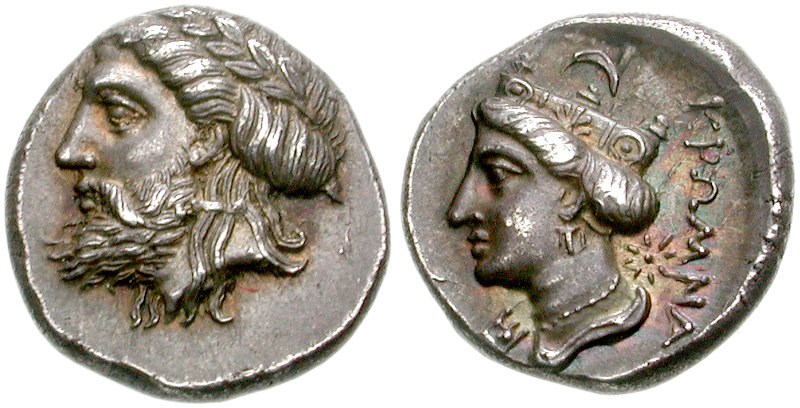 |
Hera is depicted opposite her husband, Zeus, the chief god of the ancient Greeks, on this silver drachm struck in the 4th Century B.C. at Cromna, a city in Paphlagonia (located in the northern part of modern-day Turkey).
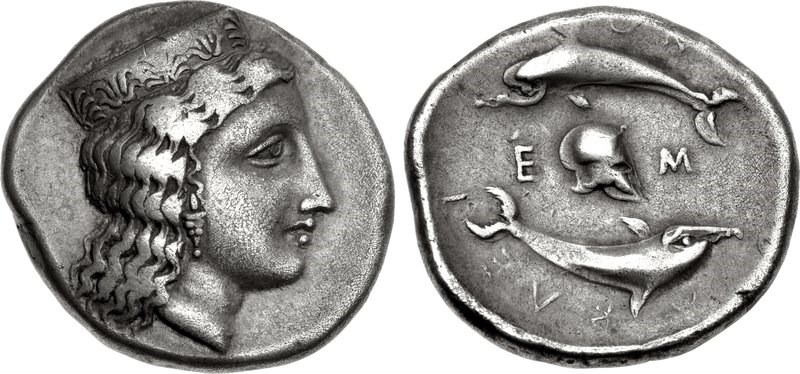 |
Hera is portrayed on this silver stater issued c.370-350 B.C. in Argolis, Argos. This Greek city was home to the Heraion of Argos, an important sanctuary dedicated to Hera.
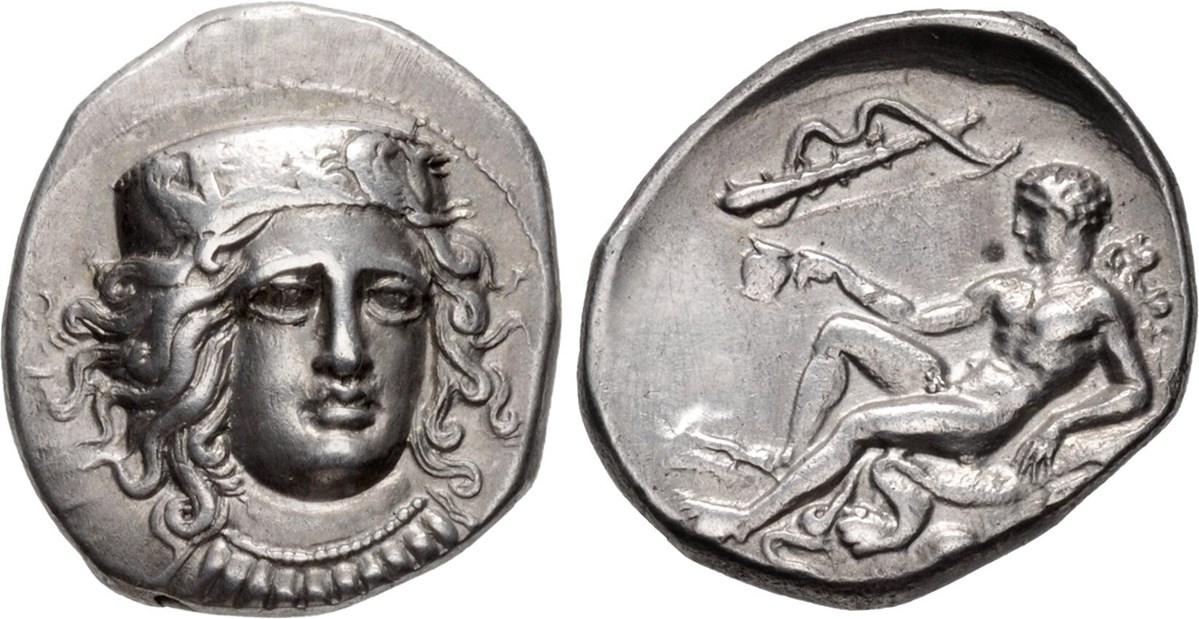 |
Another important temple dedicated to Hera was that of Hera Lacinia, near Croton in southern Italy. This silver stater issued c.400-325 B.C. in Croton shows Hera Lacinia on the obverse and the Greek hero Heracles on the reverse. The juxtaposition is interesting, because even though Heracles’ name derives from Hera, she detested him because he was conceived in one of Zeus' many dalliances. In revenge, Hera drove Heracles to kill his wife and children in a fit of madness, leading him to seek redemption through his famous Twelve Labors.
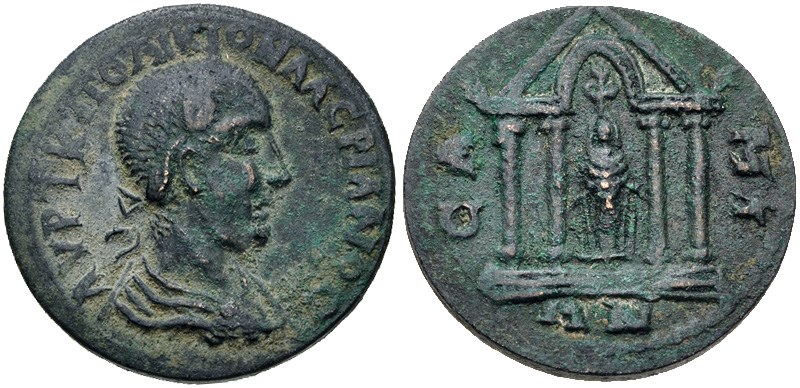 |
Hera was also revered at the Heraion of Samos, located on the island of Samos, off the western coast of Asia Minor. This bronze coin of Samos issued for the emperor Valerian I (A.D. 253-260) shows on its reverse a temple containing the cult statue of Samian Hera.
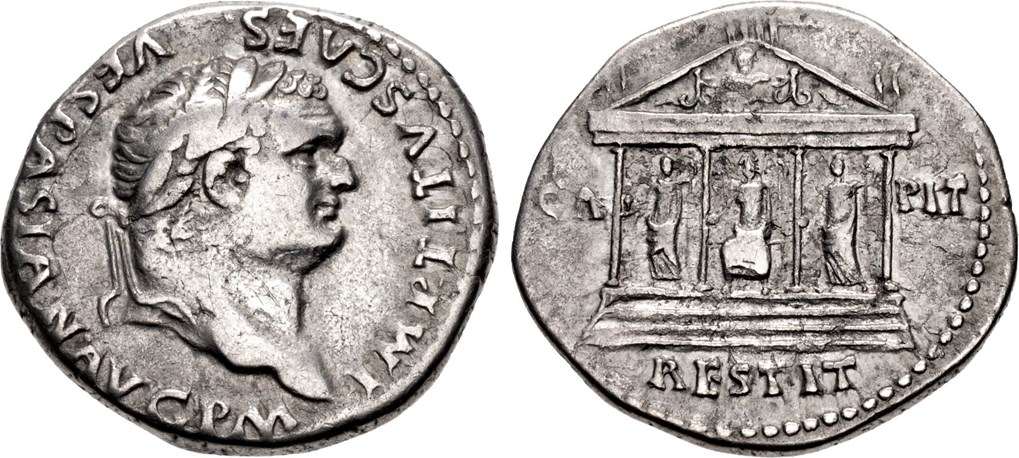 |
Hera was incorporated into Roman mythology as Juno, who, along with the deities Jupiter and Minerva, was a member of the Capitoline Triad. Jupiter and Minerva, respectively, were the Roman equivalents of the Greek deities Zeus and Athena.
The silver cistophorus (above) was struck for the emperor Titus (A.D. 79-81). It shows the Temple of Jupiter Optimus Maximus in Rome, within which are three figures representing the Capitoline Triad.
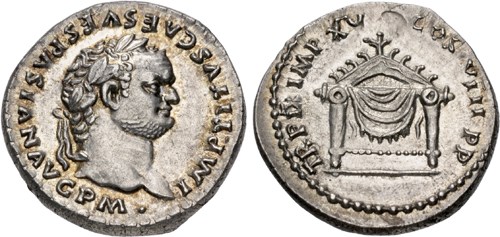 |
This silver denarius of Titus shows a pulvinar of Jupiter and Juno. These sacred thrones were brought to major religious events as a way for Roman deities to be present.
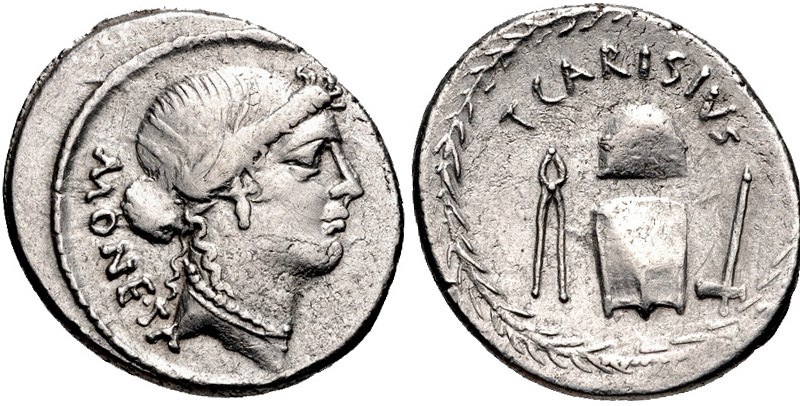 |
Juno had various titles, including Moneta (likely related to the word for advisor), which appears on this silver denarius struck at the Rome mint in 46 B.C. for the moneyer T. Carisius. The Temple of Juno Moneta was located in the heart of ancient Rome next to where coins were minted. Juno Moneta was worshipped as the protectress of Rome’s money, so it’s fitting that the tools used to strike coins are shown on the reverse of this denarius.
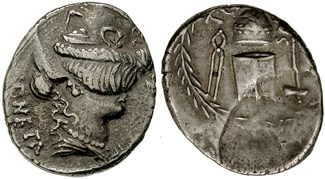 |
Here is an interesting silver denarius of this same Juno Moneta type. It suffered from more than one minting error, including being double-struck with rotation — an irony given the minting motif of the reverse.
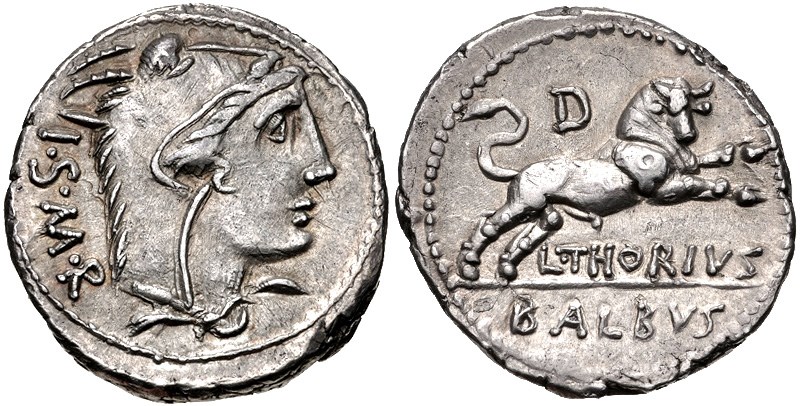 |
Another form of the goddess was Juno Sospita (the savior), who is depicted with a goat-skin headdress on this Roman Republican silver denarius struck c.105 B.C. Her festival was celebrated annually in February, a month of purification.
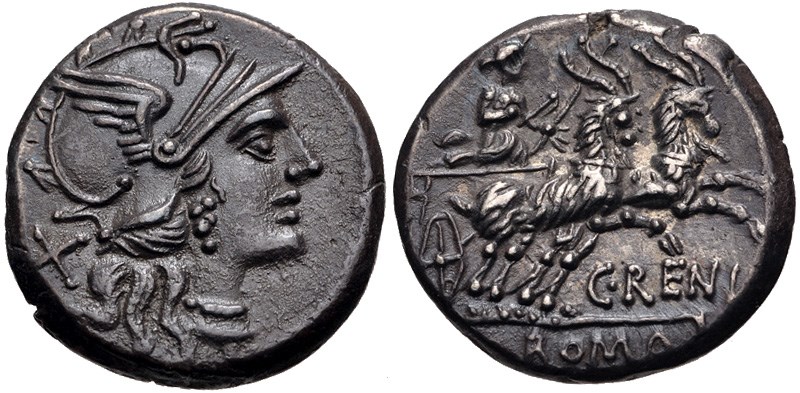 |
This Roman Republican silver denarius of c.138 B.C. shows the head of Roma opposite Juno Caprotina driving a biga of goats. The Nonae Caprotinae festival honoring women (particularly slaves) was held in July and involved a sacrifice of one of her sacred animals, the goat.
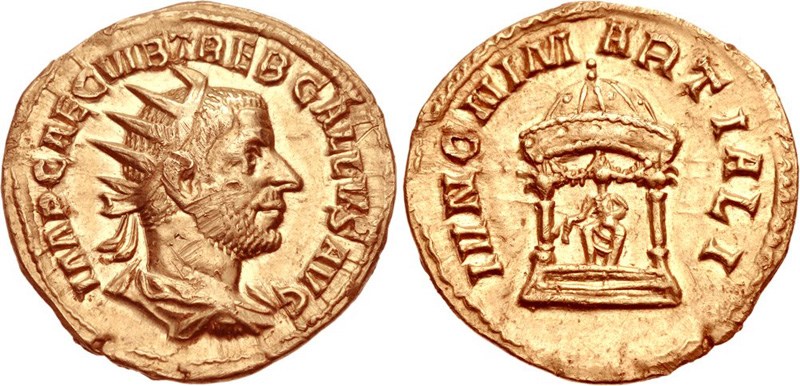 |
This gold heavy aureus or binio struck under the emperor Trebonianus Gallus (A.D. 251-253) links Juno to the word for Mars, the god of war (Juno’s son), for whom March is named. This epithet was used on coins issued during the reign of Gallus, who was swept into power by the army only to be betrayed by his soldiers two years later.
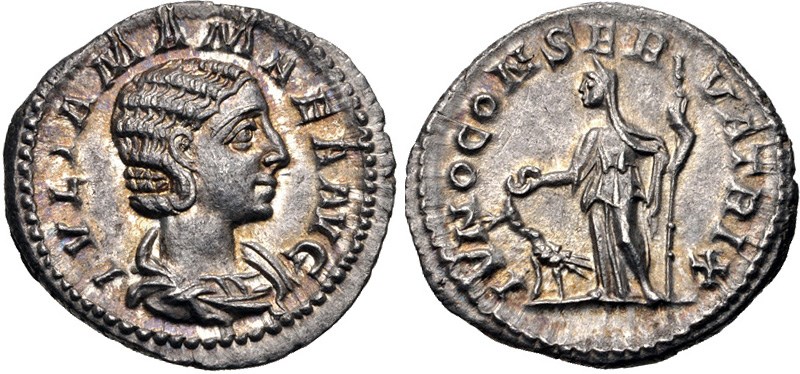 |
Juno Conservatrix (the preserver) found favor with the empress Julia Mamaea, who used it on her coins, including this silver denarius struck sometime between A.D. 222 and 235. Mamaea was the mother of the emperor Severus Alexander (A.D. 222-235). Despite her efforts to preserve the Severan dynasty, it ended in 235 when she and her son were murdered by their own troops.
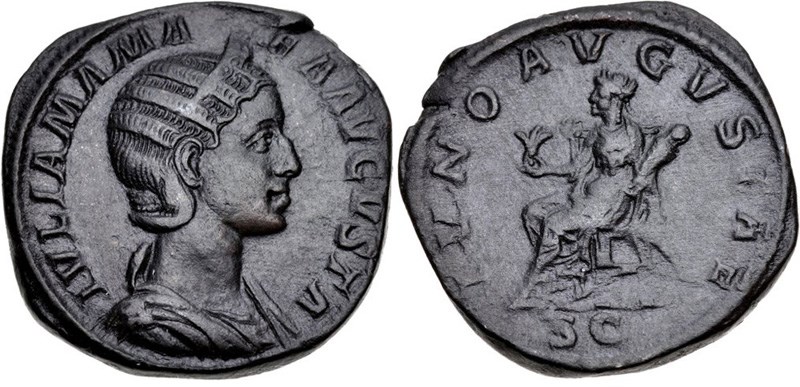 |
On this base metal sestertius, both Julia Mamaea and Juno bear the lofty title of Augusta. Juno, the goddess of women and childbirth, is depicted holding an infant. Mamaea held enormous influence over her son, who became emperor at the age of 13.
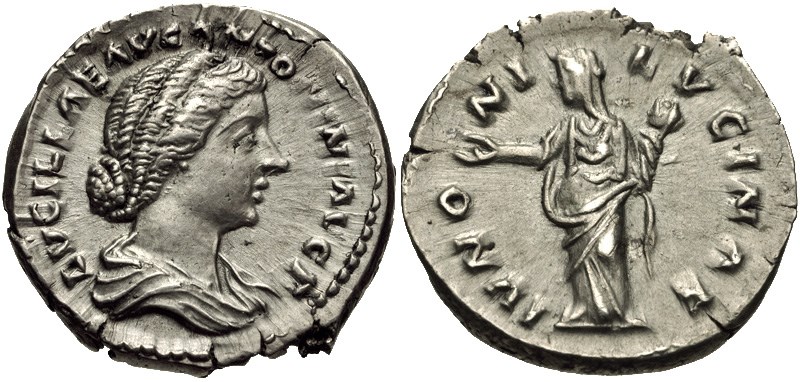 |
Juno Lucina (from the word for light) was regarded as the protector of pregnant women and newborn children. This silver denarius struck A.D. 164-182 shows Lucilla, the daughter of Emperor Marcus Aurelius (A.D. 161-180) and the wife of Lucius Aurelius Verus, who ruled alongside Marcus Aurelius until 169. Lucilla gave birth to three children by the time she was in her early 20s, two of whom died young.
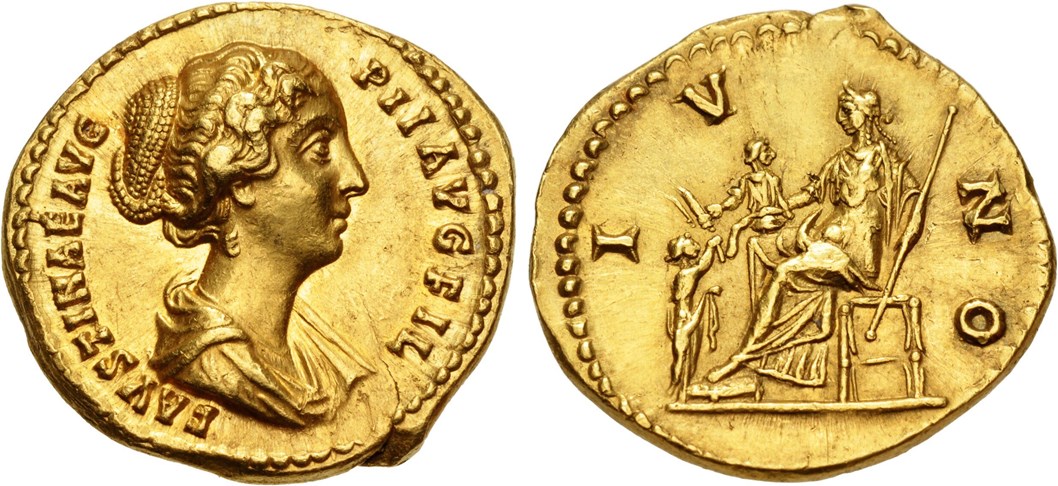 |
This gold aureus of c.A.D. 149 shows Faustina Junior, who married Marcus Aurelius, then the heir apparent of the emperor Antoninus Pius (A.D. 138-161). The reverse shows a wholesome scene featuring Juno with two children. Faustina Junior gave birth to 14 children, with the only male surviving to adulthood being Commodus, a future emperor whose reign was infamous.
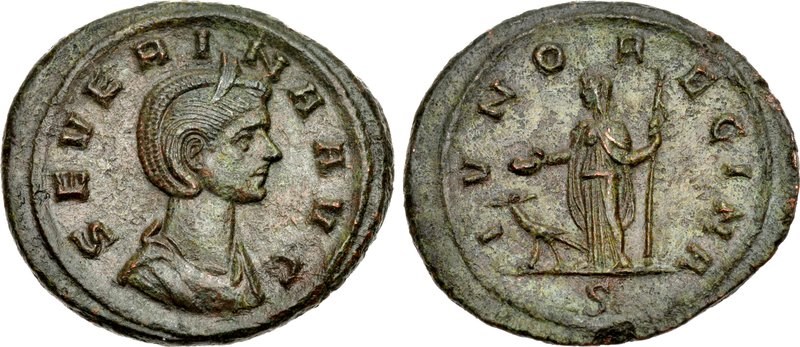 |
The standing figure of Juno Regina (Juno the Queen) appears on this base-metal reduced sestertius. The obverse shows Severina, wife of Emperor Aurelian (A.D. 270-275), with the title Augusta. Juno Regina is depicted with her sacred bird, the peacock.
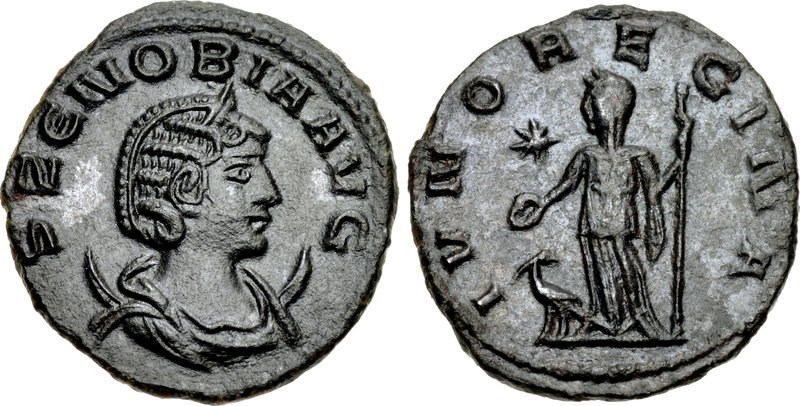 |
Not only was the name of Juno invoked by the Romans, it also occurs on coinage of the rebel-queen Zenobia (A.D. 267-272). This billon double-denarius echoes the design of the contemporaneous Severina coin above, with Juno Regina on the reverse. The obverse, however, shows Zenobia, queen of the Palmyrene Empire in Syria, who led an ultimately unsuccessful rebellion against the Roman Empire.
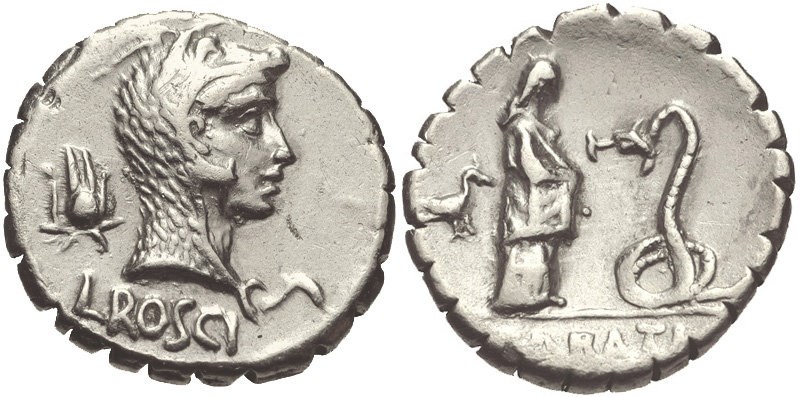 |
Given the widespread influence of Rome in Europe, Africa, and western Asia, it’s no surprise that Juno was combined with traditions from other cultures through the process of syncretism. This Roman Republican denarius serratus of c.64 or c.59 B.C. shows a portrait of Juno Sospita positioned to the right of the headdress of Isis, who was a powerful Egyptian goddess of women and children. The reverse shows a bird behind a woman standing before an erect snake.
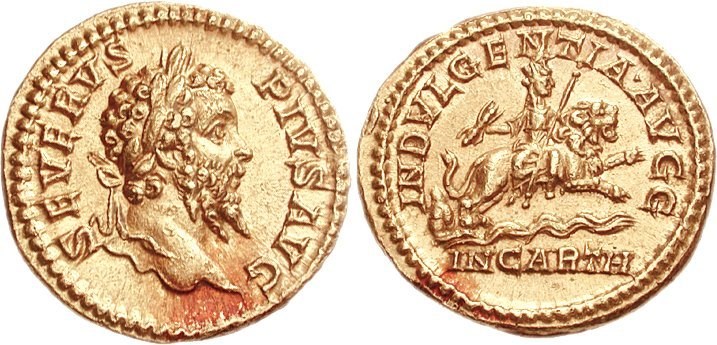 |
This gold aureus of the emperor Septimius Severus (A.D. 193-211) shows Dea Caelestis, a merging of the Carthaginian goddesses Tanit with elements of the Roman pantheon, including Juno. Severus, who was born near Carthage, spent considerable time in the middle of his reign strengthening Roman rule in northern Africa. Carthage was home to the Temple of Juno Caelestis, which was built in the 2nd century A.D. It became a major pilgrimage site of the Roman Empire before ultimately being converted to a cathedral.
Images courtesy of Classical Numismatic Group.
