Jeff Garrett: The Stellas Reach for the Stars
Posted on 4/30/2026
 |
Yesterday’s Heritage Auctions Platinum Session featured a group of coins that rarely cross the auction block at the same time: a complete set of $4 Stellas. This usually only occurs when major collections are being sold. The Presidio Collection, which Heritage has sold over two sales (starting at the FUN Show in January), certainly qualifies. The collection also featured an example of the iconic 1804 Silver Dollar.
These Stellas that were sold in yesterday’s auction were all graded by NGC and the final results were stunning, to say the least. Most of the coins broke price records for the grade and these prices are further evidence of the incredible strength of the high-end rare coin market.
Very few US coins inspire the awe and fascination as the 1879 and 1880 $4 gold coins, otherwise known as Stellas. These enigmatic coins are far beyond the financial reach of most collectors. Despite this, the Stella has become one of the most popular US coins ever produced. Wealthy collectors have created a demand that far outstrips supply. Even circulated examples now command a nearly six-figure price. The five-pointed star and the word "Stella" have become iconic symbols in numismatics.
Interestingly, the $4 Stellas of 1879 and 1880 are actually pattern coins and were not intended for circulation. The issue is one of the few such coins that are commonly sought by collectors of regular issue US coinage. The 1856 Flying Eagle Cent and the 1836 Gobrecht Seated Dollar are other examples. Because of their popularity, all of these are listed along with regular coinage in A Guide Book of United States Coins (The Red Book).
The story of the $4 Stella began in the 1870s when several countries advocated the establishment of a universal coin that would correlate to several international currencies. A few efforts were made early in the decade, hence coins such as the 1874 Bickford pattern $10 gold pieces, but the most serious attempt came in 1879.
That year, the United States’ minister to Austria-Hungary, John A. Kasson, proposed a $4 gold coin with a metallic content stated in the metric system, making it easier for Europeans to use. Per Kasson’s proposal, this new coin would approximate in value the Spanish 20 Pesetas, Dutch 8 Florin, Austrian 8 Florin, Italian 20 Lire, and French 20 Franc pieces, among other denominations. The purpose of the $4 gold coin was to facilitate international trade and travel for US citizens. The creation of the Euro over 100 years later had a similar intent for trade among member nations.
Congress became interested enough in Kasson’s suggestion to order the Mint to produce a limited run of the $4 gold pieces so that Congressmen could review the coins. Soon thereafter, Chief Engraver Charles Barber prepared an obverse design that depicted a portrait of Liberty facing left with long, flowing hair. Meanwhile, George T. Morgan created a motif featuring a portrait with coiled hair. Morgan designed the most famous and popular coin in all of numismatics: the silver dollars known simply as Morgan Dollars.
The Mint's quest for an international coinage ended in failure, and none of the pattern coins struck around this time ever became a regular issue. Although these coinage efforts were failures, collectors of the time and for generations after have coveted the 1879 and 1880 $4 gold issues. The Coiled Hair examples are particularly desirable and usually only show when great collections are sold.
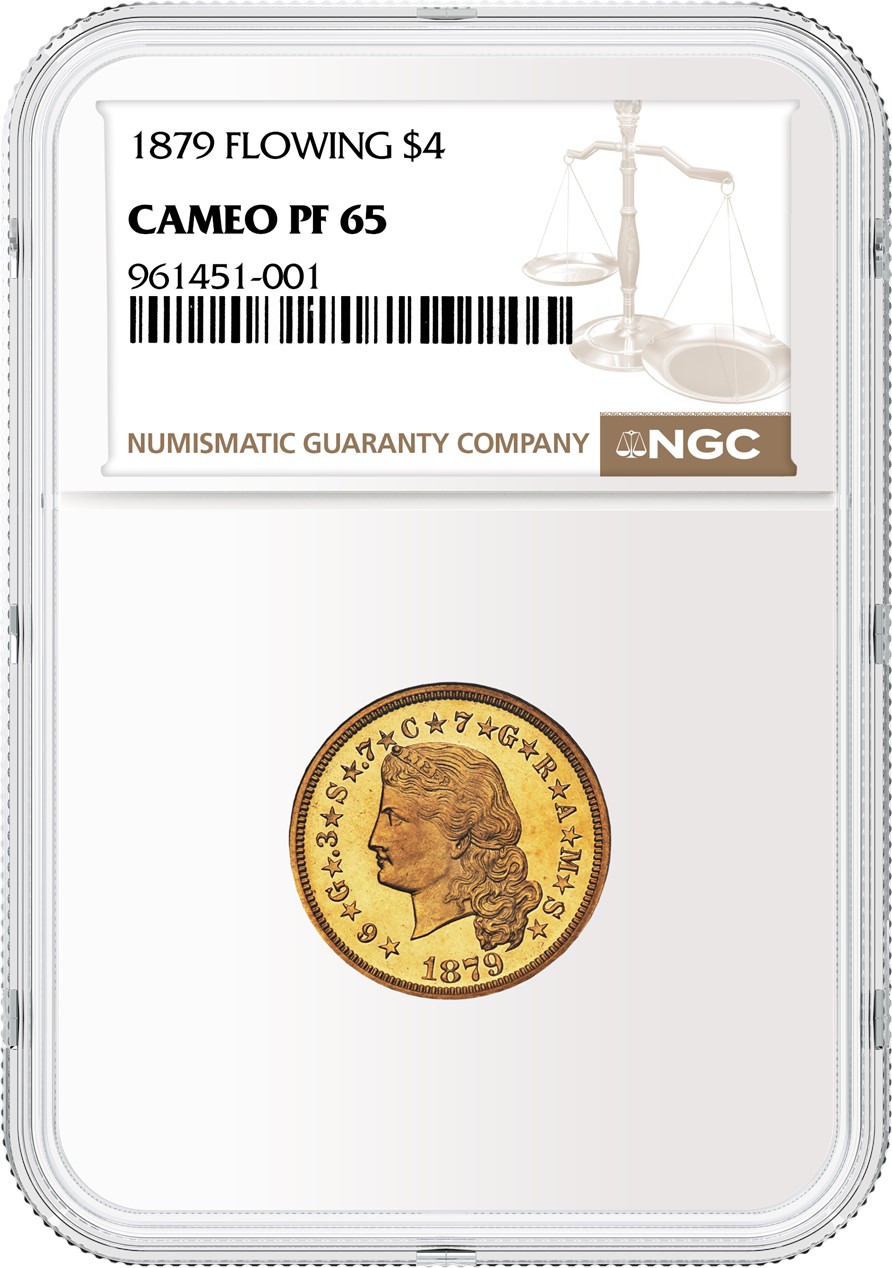
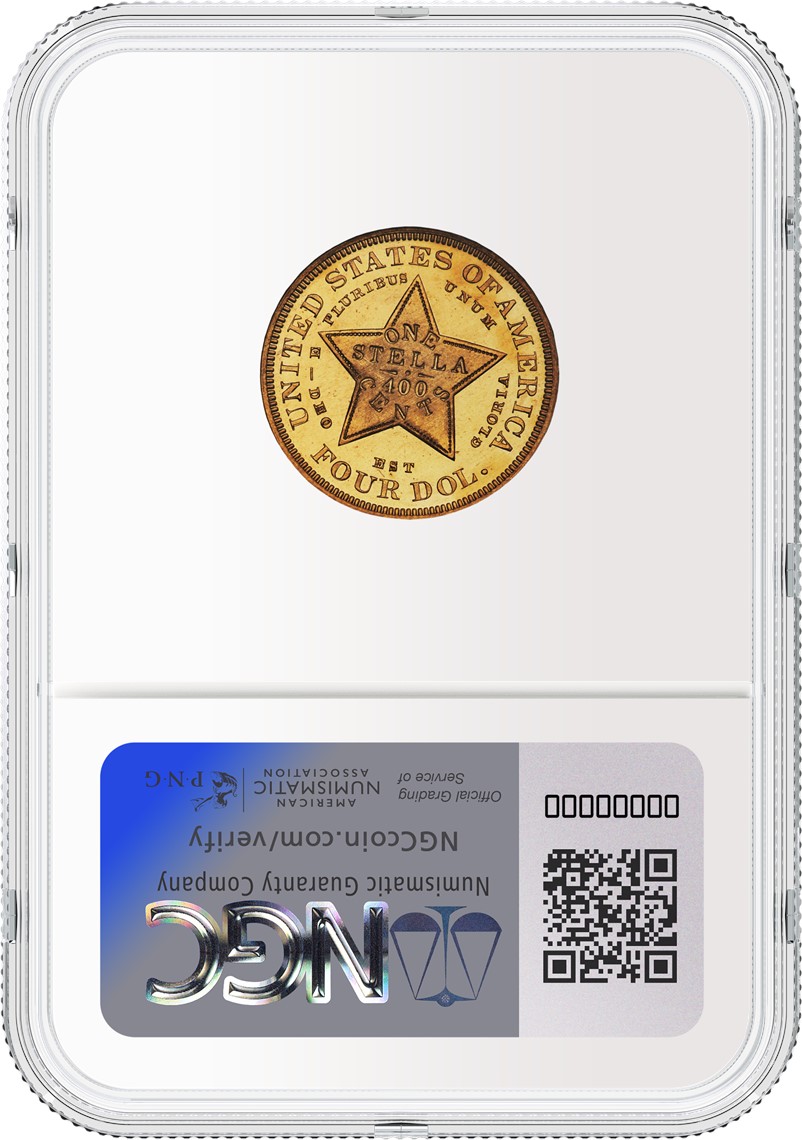
1879 Flowing Hair Stella
- Estimated mintage: 425 to 725
- Examples known: Fewer than 500
- Presidio specimen: NGC PF 65 Cameo, realized $201,300
 |
 |
| Click images to enlarge. | |
The 1879 Flowing Hair Stella is by far the most available of the four known issues, as this was the version produced for Congress. Although 425 pieces were supposedly struck, it is likely that as many as 725 were minted in total. One numismatic legend states that some Congressmen gave their Stellas to mistresses as gifts, which could explain the large number of ex jewelry specimens known today. Collectors buying circulated examples should be very wary of repair and only purchase NGC-certified coins.
Nearly all 1879 Flowing Hair Stellas exhibit light roller marks, regardless of grade. This was probably caused when the planchets were being produced by rolling down Half Eagle planchets to the proper thickness.
The surfaces of 1879 Flowing Hair Stellas can also vary greatly. The most desirable coins are early strikes with deeply mirrored surfaces and sharp cameo contrast. Because of the relatively high mintage, later strikes can have striated and somewhat frosted fields and devices. These coins more closely resemble satin finish Proofs of a later era.
Some numismatic references state that only 15 original coins were minted. This may be true, but so far, numismatics researchers have been unable to prove an example was from this production.
The 1879 Flowing Hair Stella is probably the most available coin priced above $100,000. Its price is strictly due to its popularity. If a collector can afford one of these fascinating coins, there is a good chance they will try to acquire one. These coins are perfect for collectors who like a small box of great coins. This is a collecting strategy that has gained popularity in recent years.
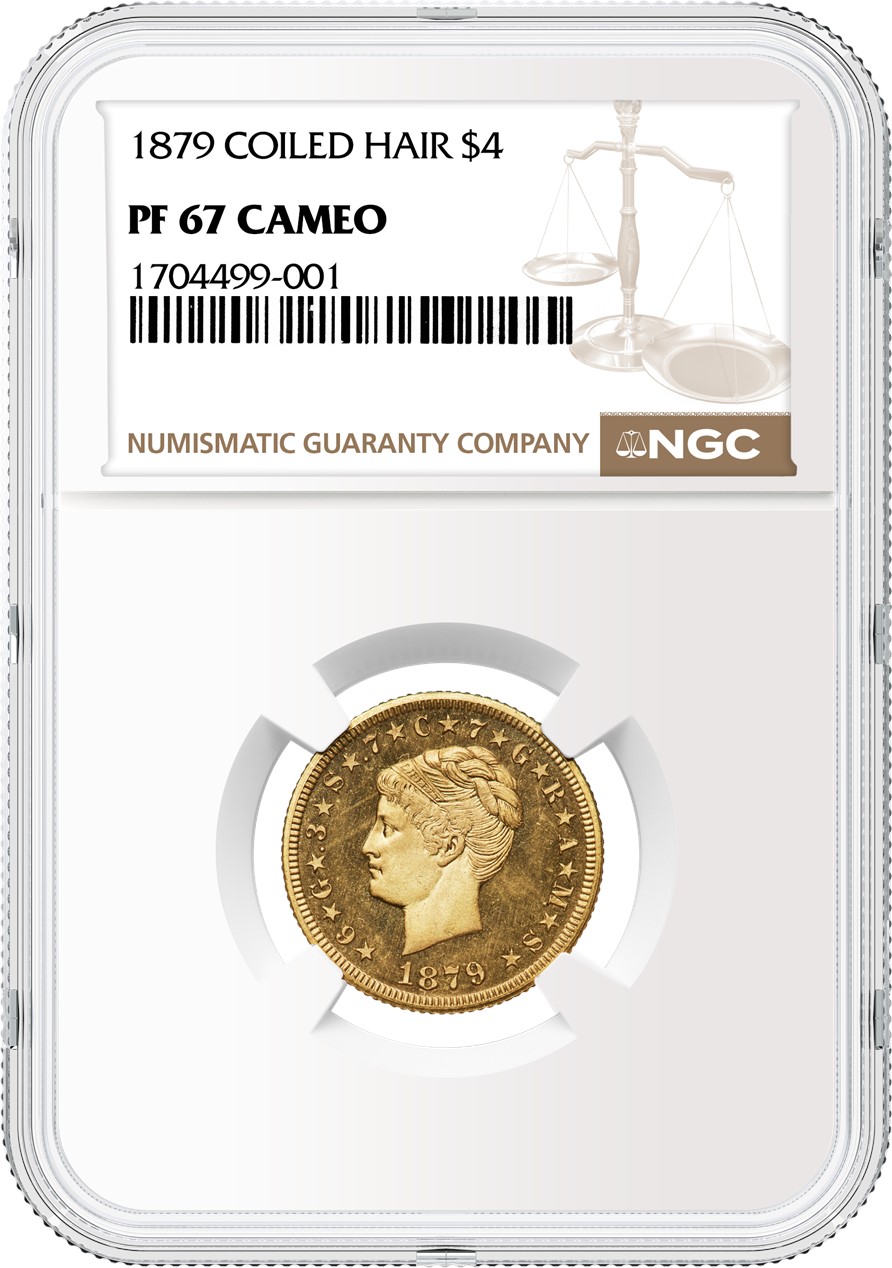
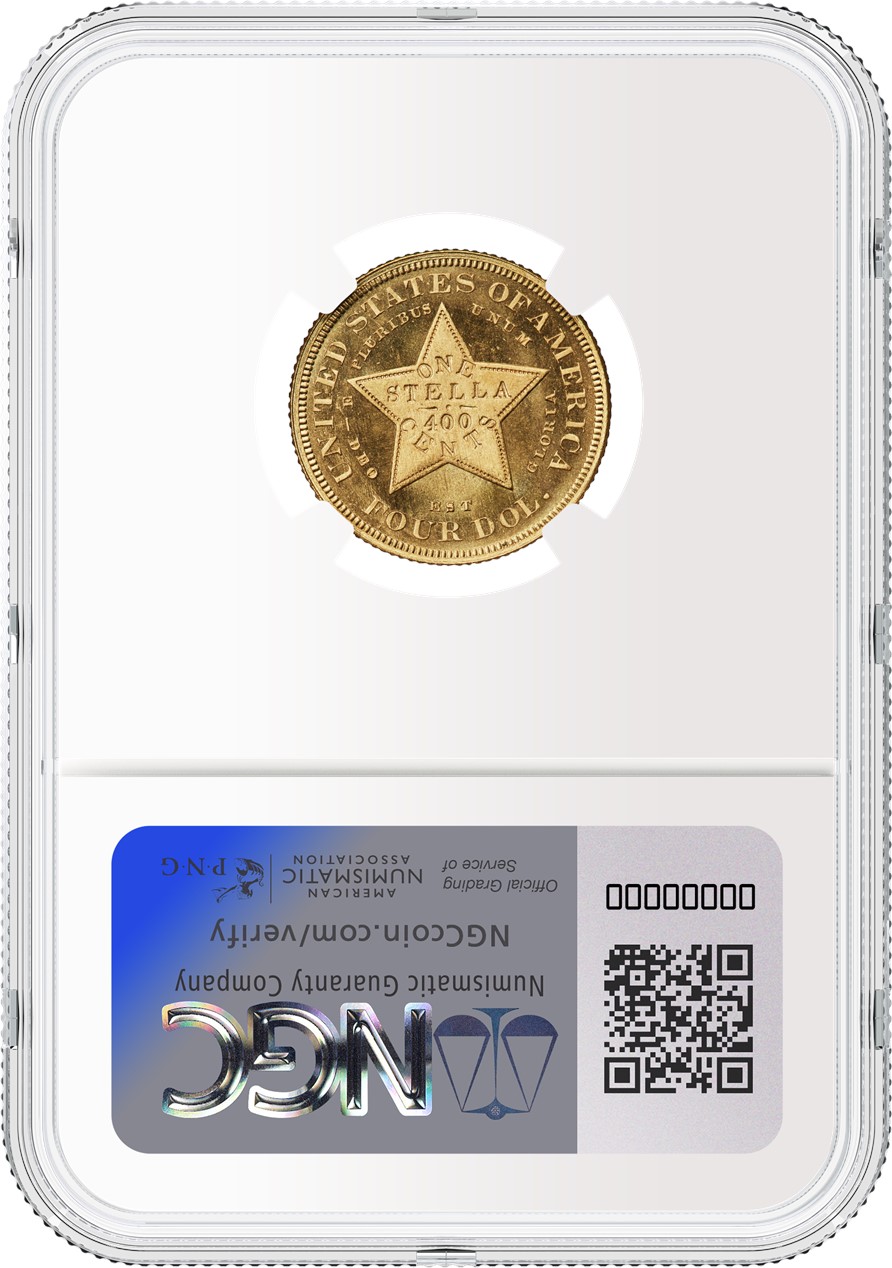
1879 Coiled Hair Stella
- Estimated mintage: 20
- Examples known: 12 to 15
- Presidio specimen: NGC PF 67 Ultra Cameo, realized $2,135,000
 |
 |
| Click images to enlarge. | |
The 1879 Coiled Hair Stella is one of the great rarities of American numismatics. The obverse coiled hair design was created by Morgan. This issue has been extremely desired by collectors since the time of issue. They were distributed by the US Mint to favored collectors and dealers of the era. Because of the low mintage, most examples seen have deeply mirrored surfaces. A few mishandled examples are known to exist, but even these sell for hundreds of thousands of dollars.
It should also be mentioned about this issue (and all four of the 1879-1880 Stella issues) that the US Mint also produced copper and aluminum examples. Some may have been gilded at the Mint, or were later gold plated. I assume it goes without saying that you should never buy one of these coins uncertified. Coiled Hair Stellas only show up at auction when great collections cross the auction block.
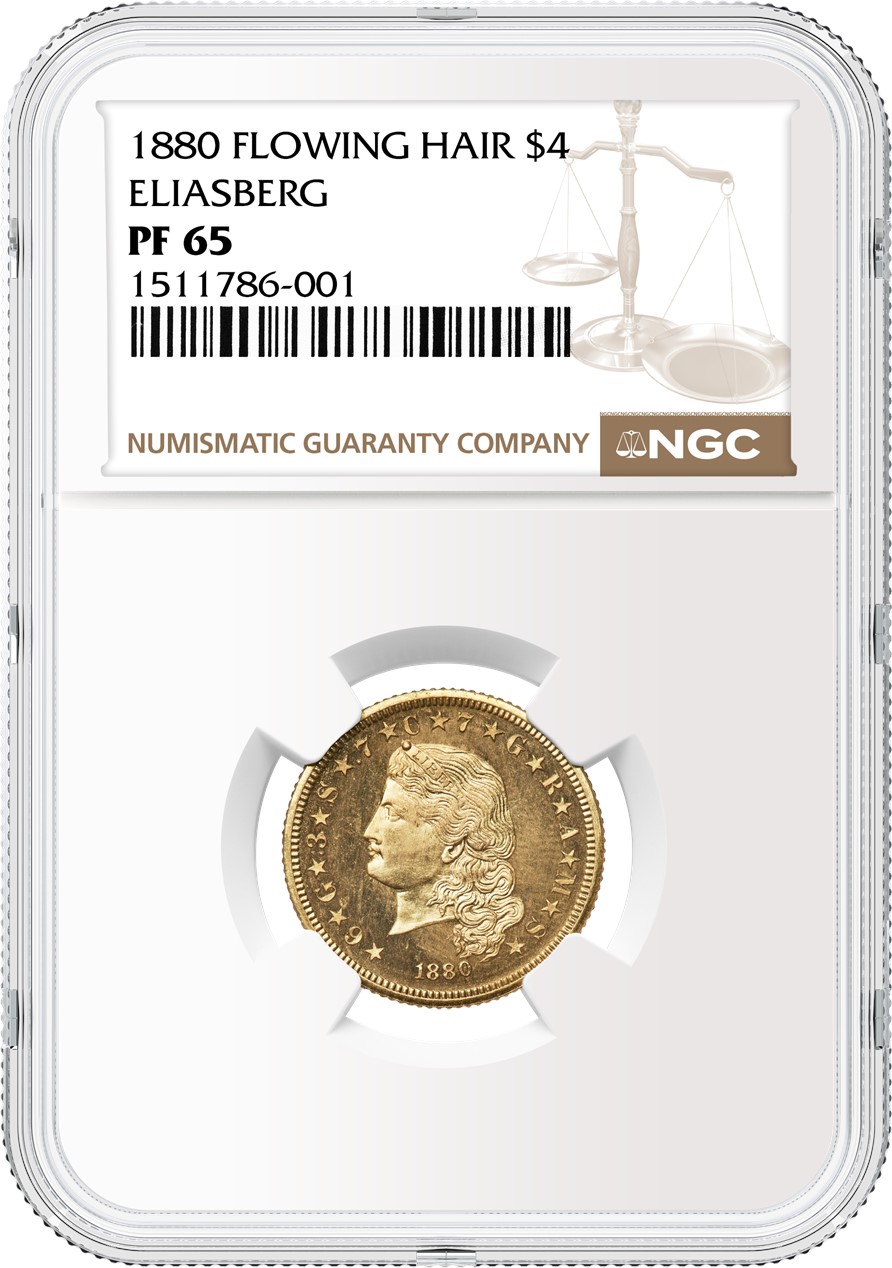
1880 Flowing Hair Stella
- Estimated mintage: 25 to 40
- Examples known: 20 to 25
- Presidio specimen: NGC PF 65 Cameo, realized $775,750
 |
 |
| Click images to enlarge. | |
The 1880 Flowing Hair Stella is many times rarer than its 1879 cousin of the same design. It lacks the star power of the Coiled Hair issues, and for many years was extremely underpriced for its rarity. More sophisticated collectors have driven the price up in recent years, and the coin now brings prices more in line with its availability.
The 1880 Flowing Hair Stella is also seen with deeply reflective mirror surfaces and with somewhat subdued surfaces. The ever-present roller marks are also common on most examples seen. There are several amazing examples known, including two in the Smithsonian National Collection.
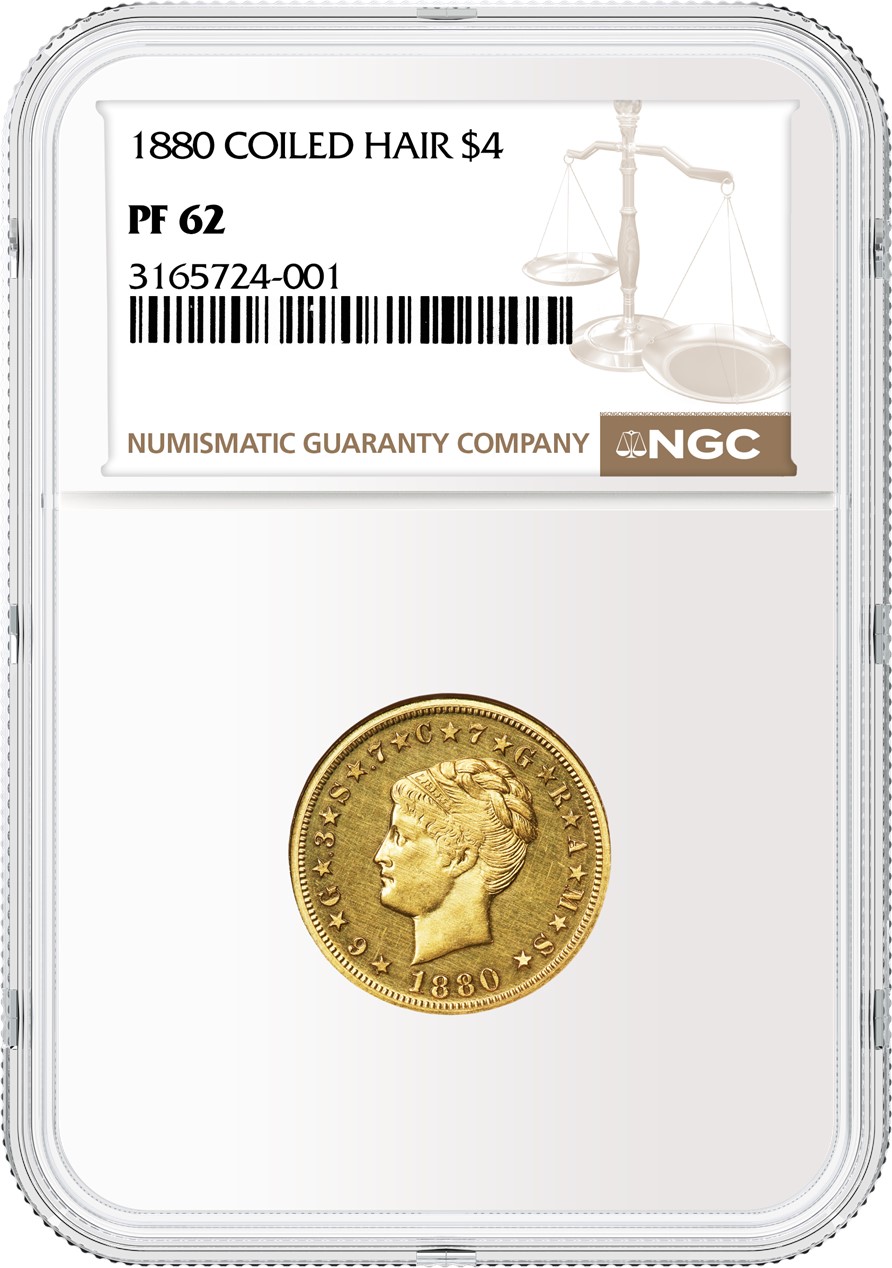
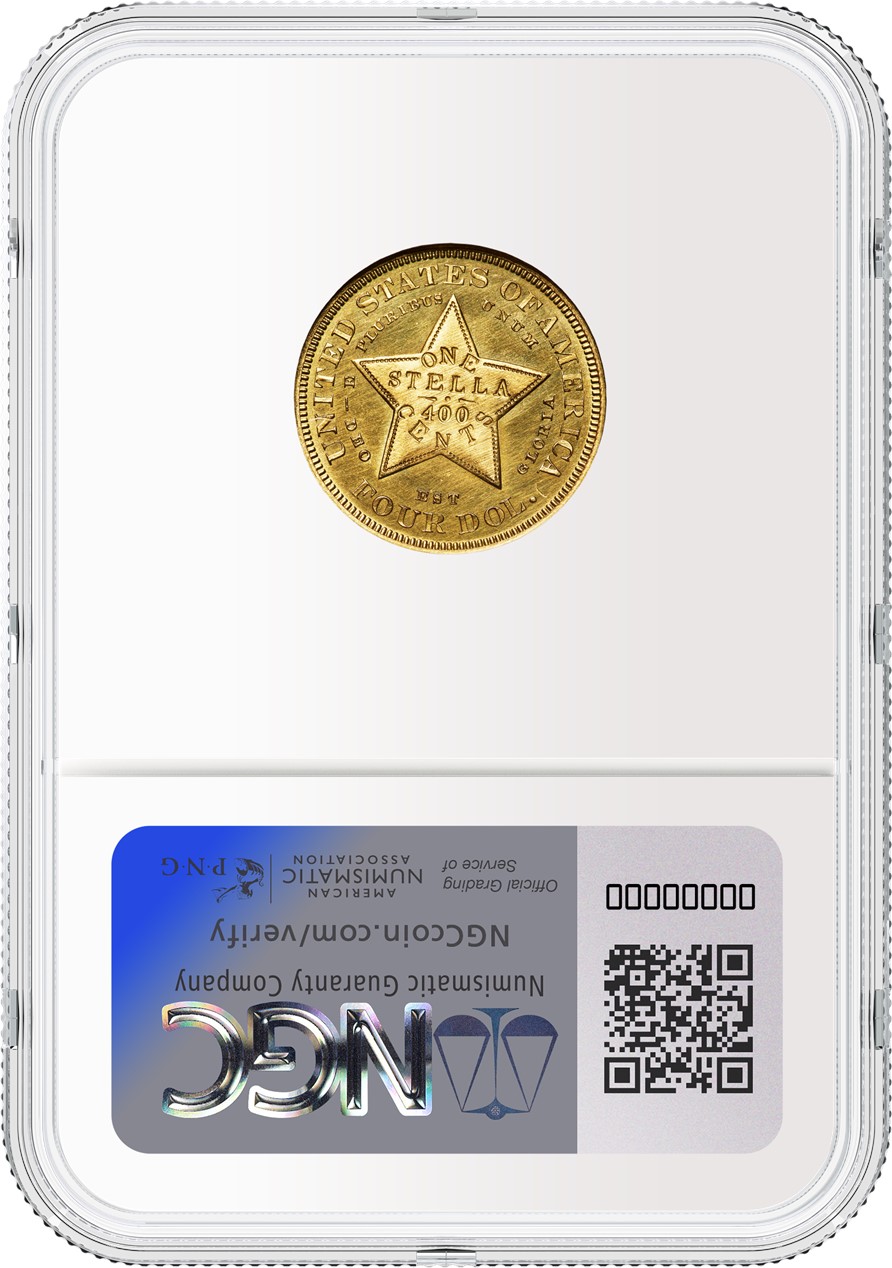
1880 Coiled Hair Stella
- Estimated mintage: 15
- Examples known: 10 to 12
- Presidio specimen: NGC PF 62, realized $854,000
 |
 |
| Click images to enlarge. | |
This is the rarest of the 1879-1880 Stella issues. It is an iconic numismatic rarity and usually makes headlines when offered at auction. An NGC PF 67 Cameo example sold for $2.57 million in 2013. Most examples seen are deeply mirrored with cameo surfaces.
Only the wealthiest individuals collect Proof US gold coins. A very select few of them attempt to complete a set of 1879 and 1880 Stellas. Completing such a set is truly a numismatic feat, and these coins only show up every few years at the most. One or two slightly mishandled examples are known, but even those sell for well over $500,000 when offered. An 1880 Coiled Hair Stella is the centerpiece for any collector lucky enough to own one.
Want to see more articles like this? Subscribe to the free NGC Weekly Market Report.
