NGC Ancients: Artemis
Posted on 4/14/2026
NASA’s Artemis II mission this month successfully brought people back to the moon for the first time in 53 years. Named after a goddess of the moon — for the ancient Greeks had more than one goddess associated with the moon — the Artemis program is expected to land astronauts on the lunar surface in 2028 with the Artemis IV and Artemis V missions.
Along with her Roman counterpart Diana, Artemis is depicted on many ancient coins, showing her connections to the moon, the hunt and nature in general. Let’s explore them.
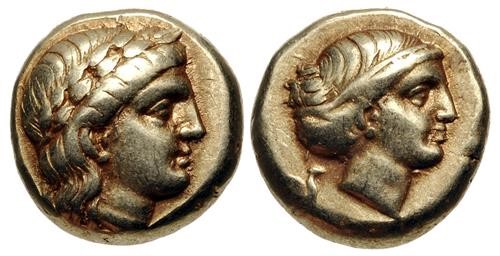 |
Artemis is shown opposite her brother Apollo on this electrum sixth stater, struck 377-326 B.C. on the Greek island of Lesbos.
As a goddess who eventually became associated with the moon, Artemis was a natural pick to name a lunar rocket program. The previous lunar program was named after Apollo because NASA’s manager felt the spacecraft echoed the theme of the sun god Apollo riding his chariot through the heavens. It wasn’t until months after the Apollo program had been named that its focus became landing on the moon.
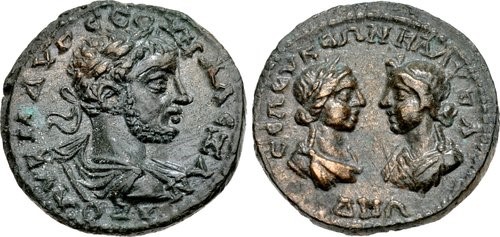 |
Artemis and her twin brother are shown facing each other on the reverse of this base-metal coin of Seleucia ad Calycadnum in Cilicia. It was struck under the Roman emperor Severus Alexander (A.D. 222-235), who is portrayed on the obverse.
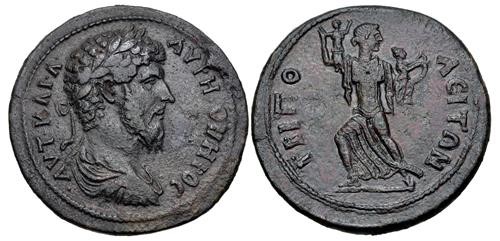 |
This base-metal coin struck at Tripolis in Lydia for the emperor Lucius Verus (A.D. 161-169) shows the goddess Leto carrying her young children, Artemis and Apollo. Their father was Zeus, whose jealous wife Hera forbade any land from giving Leto a place to give birth.
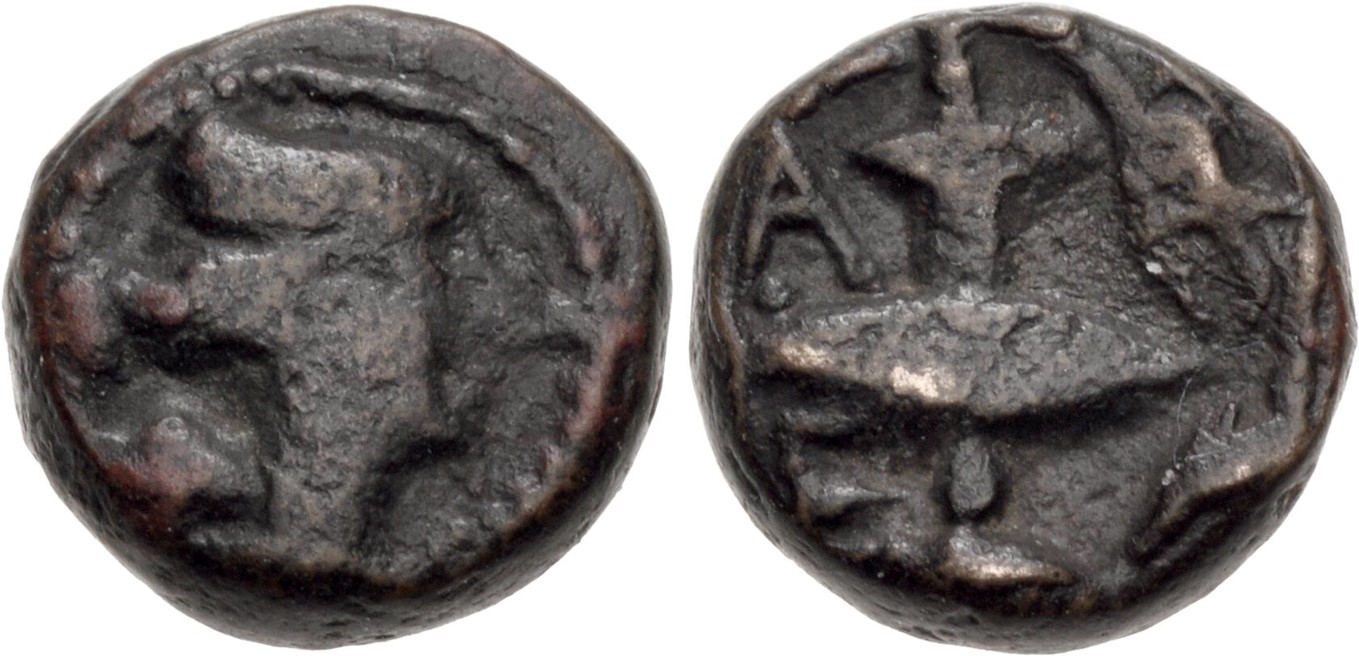 |
Despite Hera’s intervention, Leto found refuge in the island of Delos, located in the Aegean Sea between modern Greece and Turkey, where she gave birth to Artemis and Apollo. Shown here is a base-metal coin which scholars believe was struck at Athens sometime between 140 and 90 B.C. specifically for circulation on Delos. It shows Artemis on the obverse and a vase called a plemochoe on the reverse.
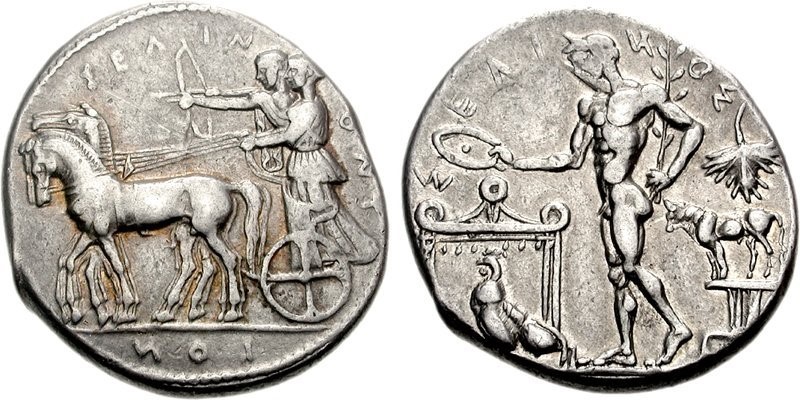 |
This silver tetradrachm produced in the mid-5th Century B.C. at Selinus in Sicily shows on its obverse a quadriga driven by Artemis, with Apollo at his sister’s side, drawing a bow. The reverse shows the local river-god Selinus sacrificing.
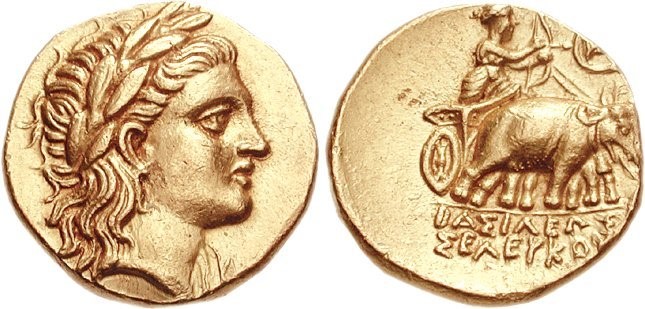 |
The widespread appeal of these twin Greek gods is evident with this gold stater struck under the king Seleucus I (312-281 B.C.) in the region of Bactria, located in central Asia, practically on India’s doorstep. The obverse shows the head of Apollo, while the reverse shows Artemis driving a biga of elephants while drawing an arrow in her bow.
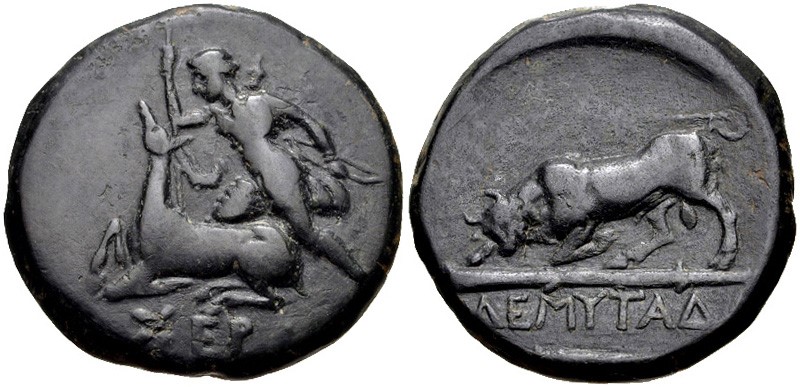 |
This base-metal coin struck in Tauric Chersonesos (modern-day Crimea) c.300-290 B.C. shows Artemis Parthenos preparing to kill a stag, highlighting her role as goddess of the hunt. The title of Parthenos underscores her perceived purity and independence, for she remained unmarried.
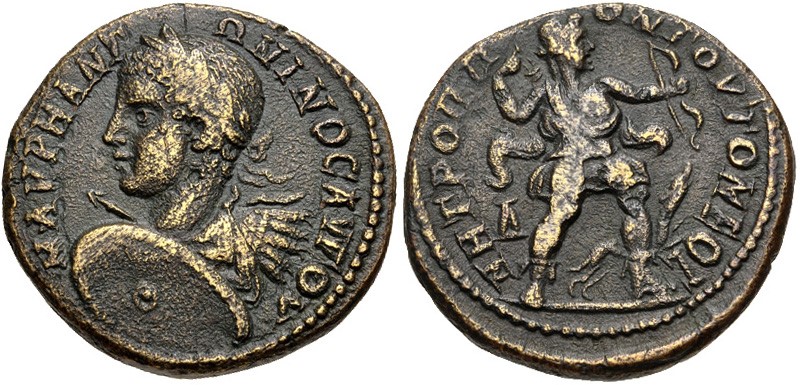 |
Artemis hunts on this base-metal coin issued at the mint of Tomis in Moesia Inferior for the emperor Gordian III (A.D. 238-244). In this dynamic scene, she advances with a hound at her feet, holding a bow and readying to draw an arrow from her quiver.
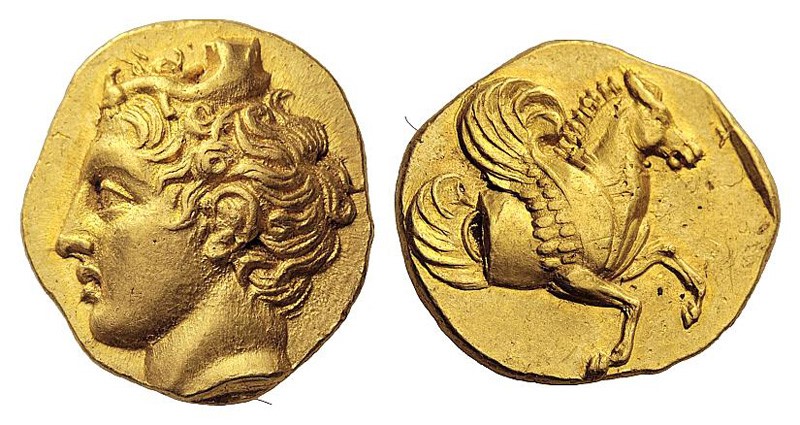 |
In one mythological story, the hunter Actaeon accidentally came across a bathing Artemis, who was so enraged that she transformed him into a stag. This gold stater struck c.394-350 B.C. at Lampsacus in Mysia shows the unfortunate hunter with a stag’s horn on his forehead.
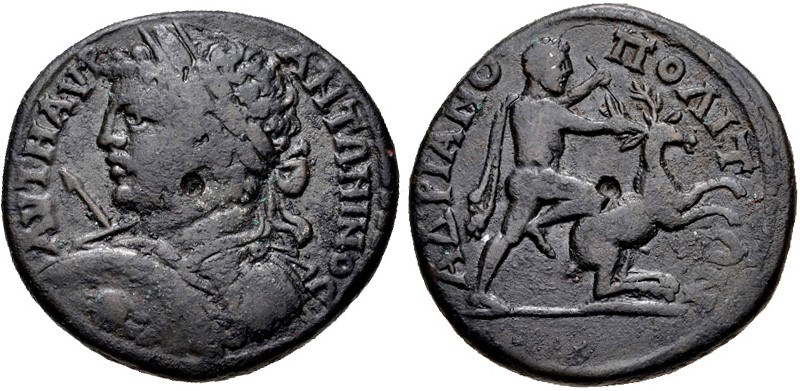 |
The legendary hero Hercules had a more positive interaction with Artemis. As one of the twelve tasks (‘labors’) assigned to Hercules to atone for killing his family in a fit of insanity, a king ordered him to capture the Cerynean Hind, an animal sacred to Artemis. The feat is shown on this base-metal coin struck in Thrace for the emperor Caracalla (A.D. 198-217). When Hercules ran into Artemis on the way to deliver his prize to the king, he begged her forgiveness, which she granted him, and he promised her he would free the animal, which he managed to do.
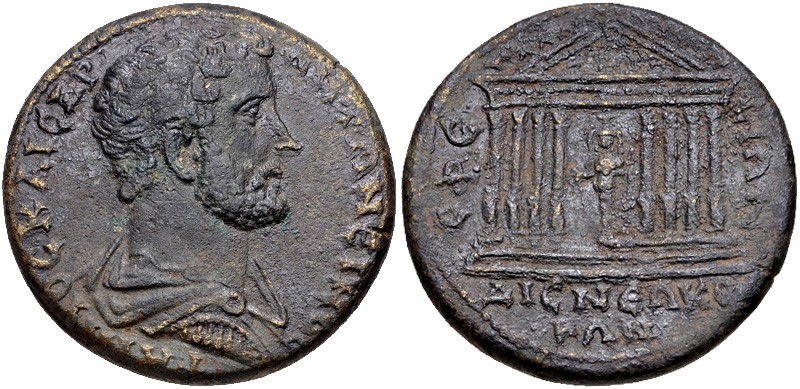 |
Artemis had a cult following at Ephesus, a major city in Ionia, in the western part of modern-day Turkey. So impressive was the Temple of Artemis there that it was considered one of the Seven Wonders of the Ancient World. There were several versions, one of which burned down in 356 B.C., only to soon be rebuilt on an even grander scale. This base-metal coin issued at Ephesus for the emperor Antoninus Pius (A.D. 138-161) shows an ornate temple containing the cult statue of Artemis.
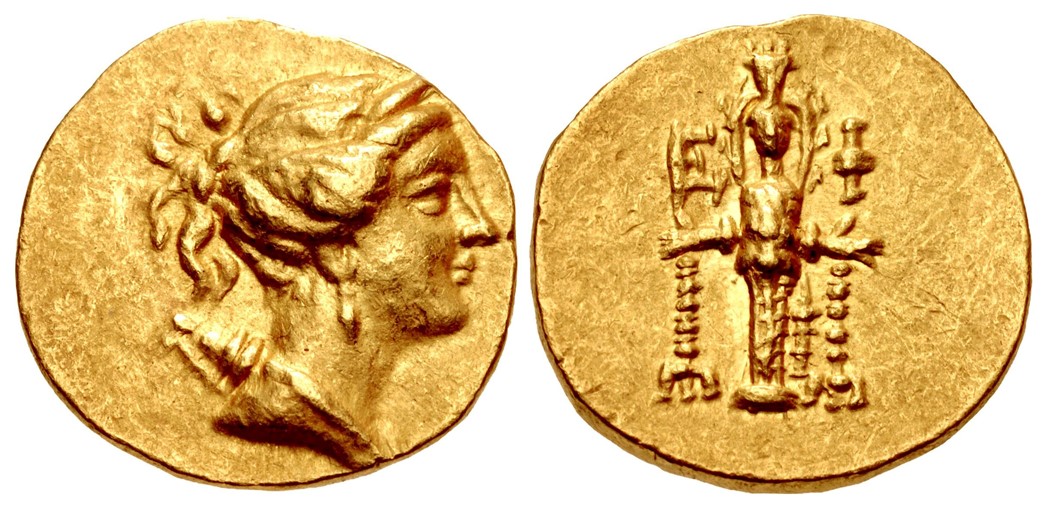 |
A better view of this statue, which has the goddess’ arms outstretched, appears on this gold stater struck at Ephesus c.123-119 B.C. It shows Artemis on the obverse with a bow over her shoulder. The statue is thought to have originally been of another goddess that pre-dated Greek influence.
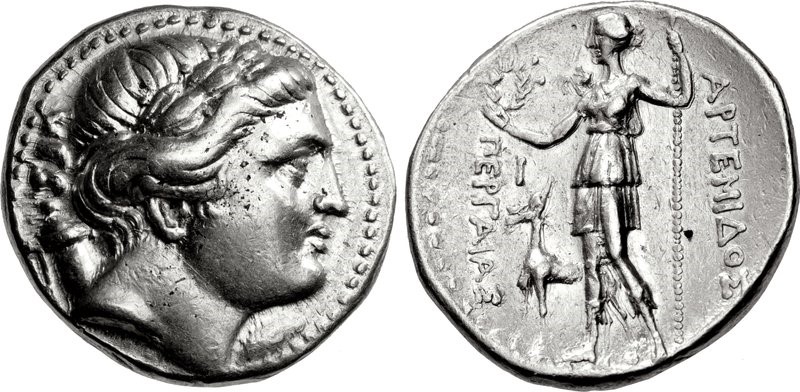 |
This silver tetradrachm struck c.260-230 B.C. in Pamphylia, Perge, in Asia Minor shows the head of Artemis on the obverse, with a bow and quiver over her shoulder. The reverse shows her standing, holding a wreath and standing next to a stag, highlighting her connections to nature and the hunt.
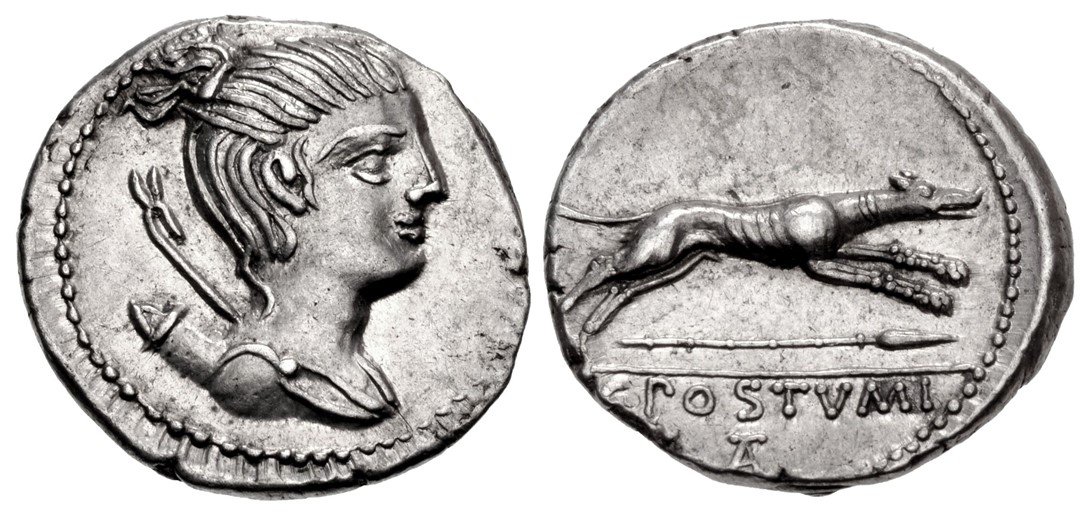 |
Meanwhile, the Romans had their own goddess associated with nature: Diana, who had Etruscan roots. Given that both Diana and Artemis were associated with fertility and nature, it was natural that the mythology of Diana evolved to take on a hunting role. This silver denarius of the Roman Republic issued c.74 B.C. shows Diana with her quiver and bow on the obverse and a hunting dog over a spear on the reverse.
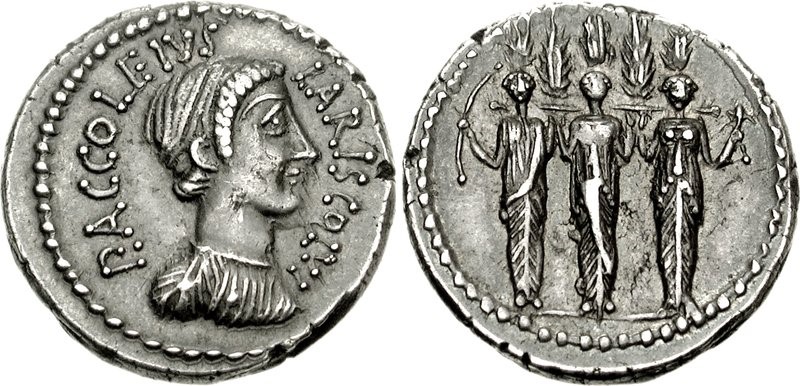 |
This silver denarius struck at the Rome mint in 43 B.C. portrays Diana Nemorensis. The reverse highlights her triple cult statue that is thought to represent her divine roles connected to hunting, the underworld (in a role traditionally associated with the Greek goddess Hecate) and the moon (in a role traditionally associated with the Greek goddess Selene).
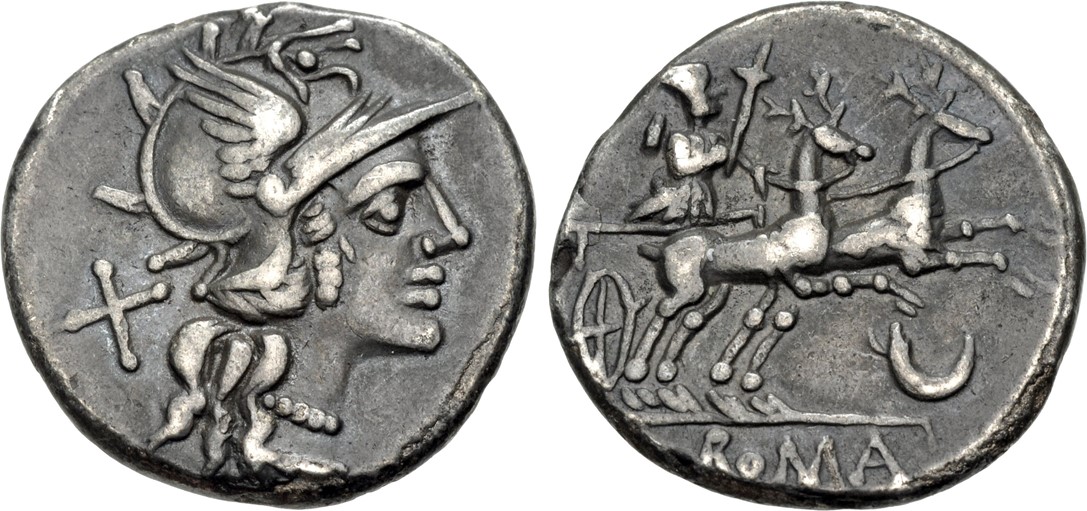 |
This silver denarius struck at the Rome mint in 143 B.C. shows Diana driving a biga of stags above a crescent. While Greek mythology did not originally associate Artemis with the moon, ancient hunting often took place at night.
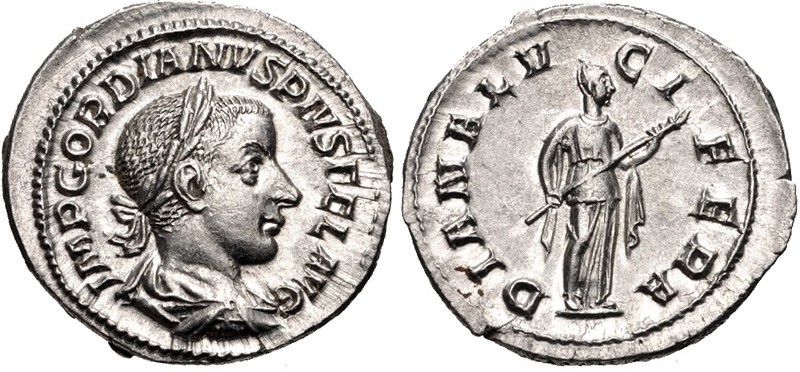 |
This silver denarius struck under the emperor Gordian III (A.D. 238-244) shows Diana Lucifera, “the light-bringer,” holding a long torch. In this role, she is seen as the goddess of the moon.
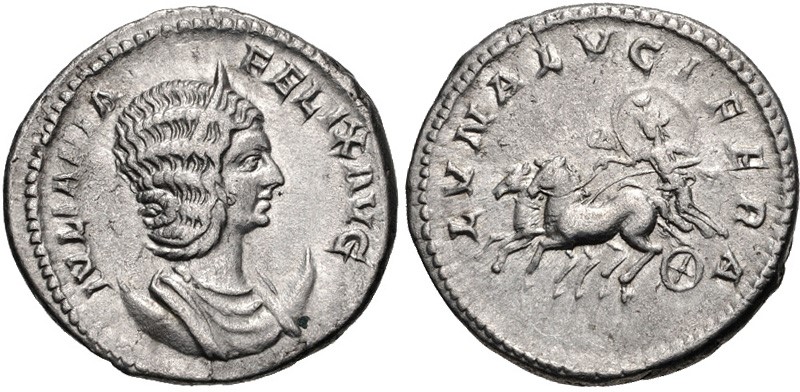 |
Filling essentially the same role as a moon goddess in Roman mythology is Luna (the counterpart of the Greek Selene). She is shown here driving a biga of horses beneath her Lucifera title on this silver double-denarius of the empress Julia Domna (A.D. 193-217).
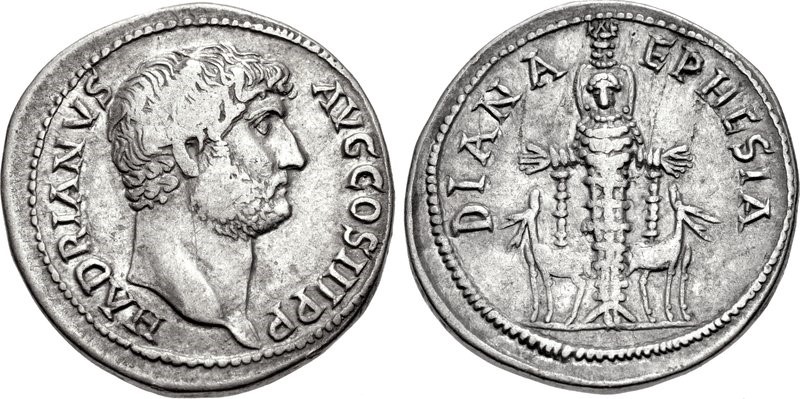 |
A blending of traditions in ancient religion and mythology called "syncretism" is applicable to the image of Artemis (Roman Diana) on this silver cistophorus struck for the emperor Hadrian (A.D. 117-138). It offers the name Diana on the reverse along with the traditional cult statue of Artemis of Ephesus, as well as the stags associated with the goddess of the hunt.
Images courtesy of Classical Numismatic Group.
