Jeff Garrett: Collecting Southern US Gold Coins
Posted on 4/2/2026
 |
Recent auction results for Southern gold coins have been astounding, especially for attractive, circulated examples. Many have more than doubled in the last few years. I can safely say this has been one of the best-performing segments of the market in recent history.
Years ago, it was an easy task to find several Southern gold coins at conventions. Now, the coins have nearly disappeared. The demand is so strong, even coins with problems are bringing surprisingly high prices. The charm of this series has definitely caught on.
 |
Contrary to popular belief, the first significant discovery of gold in America was not in California in 1848, but in the lower Piedmont area of North Carolina in 1799. Conrad Reed, the son of a local farmer, found a 17-pound yellow-colored rock that later turned out to be gold (after it served a three-year stint as a doorstop).
By the early 1830s, the Bechtler family had established a private mint in Rutherford, North Carolina. Sufficient gold was found in the area to justify the opening of an official US branch mint in Charlotte, North Carolina in 1838.
Around 1828, another gold rush began when gold was discovered in an obscure area of northern Georgia (once part of the Cherokee nation). By 1830, an average of 300 ounces of gold a day was being produced in the area. Private minters such as Templeton Reid and the Bechtler family produced their own coins from locally mined gold. In response, the US Mint established a branch mint in nearby Dahlonega, Georgia to convert the raw gold into standardized coins.
However, the really big discovery of gold (and the one with which most schoolkids are familiar), occurred in 1848 in California. John Marshall, a contractor, discovered gold at the site of a mill he was building on behalf of John Sutter. Despite instructions to keep the discovery a secret, word soon got out and prospectors and miners seeking their fortune overran the area. Sutter himself decried the discovery, claiming that the lure of gold took all his employees and laborers, leaving his businesses in ruin.
Gold coins were produced in Philadelphia, Dahlonega (Georgia), Charlotte (North Carolina), New Orleans (Louisiana), Carson City (Nevada), Denver and San Francisco. All of the mints (except Philadelphia) placed a mintmark (a letter or letters) on each of the coins to identify the source. For example, the New Orleans mint placed a small letter “O” on each of their coins. Each mint seems to have had its own set of characteristics and quirks.
Dahlonega coins are infamous for their poor strikes and general quality. Philadelphia appears to have produced the best coins of all the mints. The discovery of gold in the Southeast sparked the opening of mints in Dahlonega and Charlotte in 1838. Also in 1838, a mint was opened in New Orleans, Louisiana, to facilitate commerce in the new states and to convert the steady stream of world coins that were entering the city. Southern gold coins were struck at the Dahlonega and Charlotte Mints between 1838 and 1861, and at the New Orleans Mint from 1839 to 1861, and again from 1879 to 1906.
Several of the mints fell victim to circumstances beyond their control. For instance, in 1861, Confederate forces seized the Charlotte, Dahlonega and New Orleans mints. The first two mints were shut down as a result, never to reopen, but the New Orleans Mint was recaptured by federal troops and produced coins until 1909.
Collecting coins by their various mintmarks did not come into vogue until the 1890s, after the publication by Augustus Heaton of a treatise on mintmarks. Today, Southern gold coins are among the most popular series of US coinage. The history surrounding their production makes them extremely desirable and collectible. Assembling a complete set is possible for many collectors, as there are no mega-rarities in the series.
The Southern Mints
Charlotte, North Carolina (1838-1861)
 |
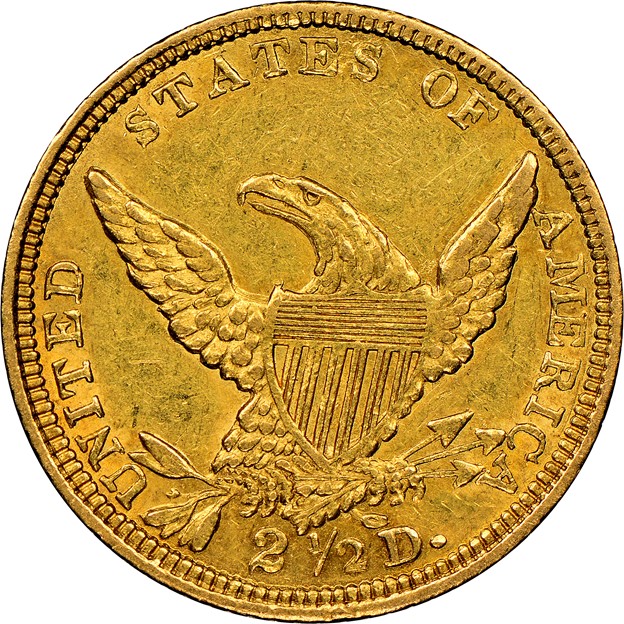 |
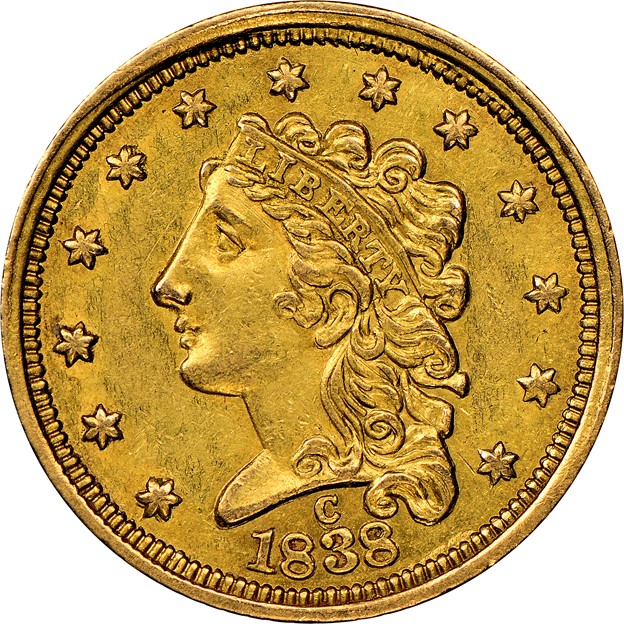
| An 1838-C Quarter Eagle Click images to enlarge. |
|
The Charlotte Mint opened in 1838 to process locally mined gold. In 1844, a substantial portion of this mint burned to the ground, preventing coinage in 1845. In 1861, Confederate forces seized the Charlotte Mint and shut it down, turning it into a hospital and headquarters during the Civil War. From 1867 to 1913, the building housed a US assay office.
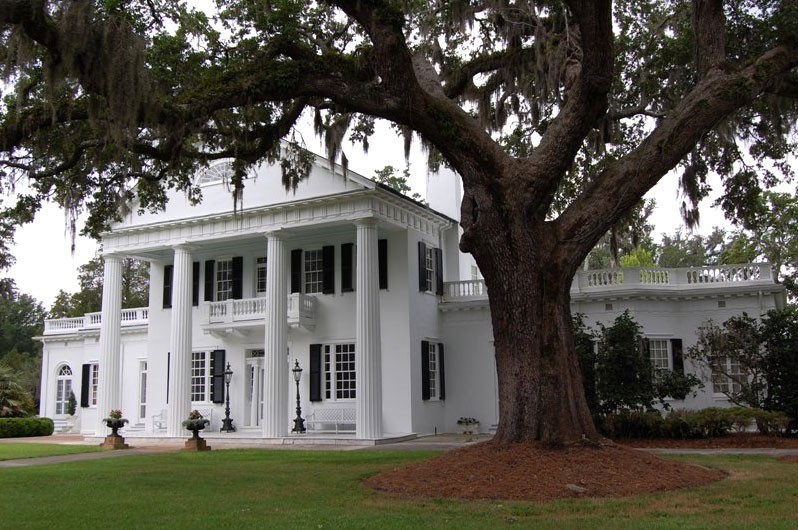
The building was later moved and currently houses an art museum. The mintmark for Charlotte is the letter "C." The Charlotte Mint produced only gold coins, usually of low mintage, not quite up to the standards of the Philadelphia Mint, but generally better than the coins produced at its sister facility in Dahlonega.
Dahlonega, Georgia (1838-1861)
 |
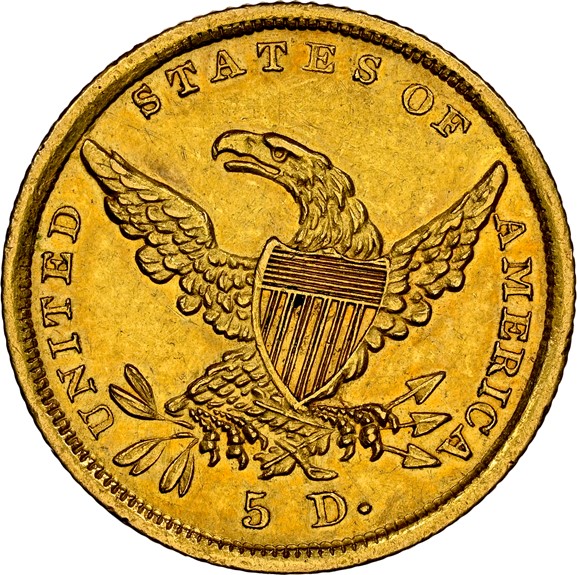 |
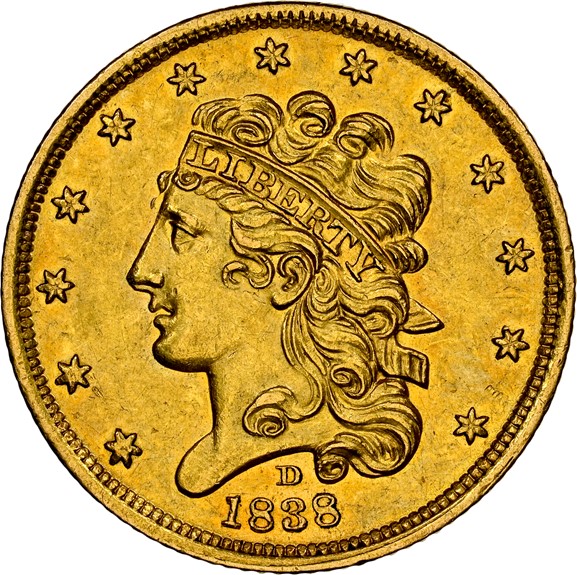
| An 1838-D Half Eagle Click images to enlarge. |
|
The Dahlonega Mint opened in 1838 to process locally mined gold, as well. Output at this mint was always low, yet it continued to operate until 1861, when Confederate forces seized the building at the outset of the Civil War. In 1878, the Dahlonega Mint was destroyed by fire.
Today, Price Memorial Hall of North Georgia College sits on the original foundation of the Dahlonega Mint. The mintmark for Dahlonega is the letter "D" (the same as the Denver Mint, but the two mints never operated simultaneously). The Dahlonega Mint produced only gold coins, many of which were poorly made.
New Orleans, Louisiana (1838-1909)
 |
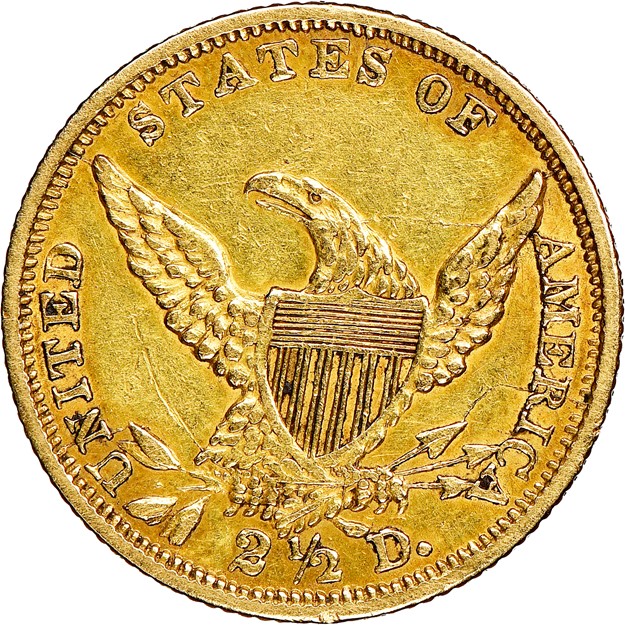 |
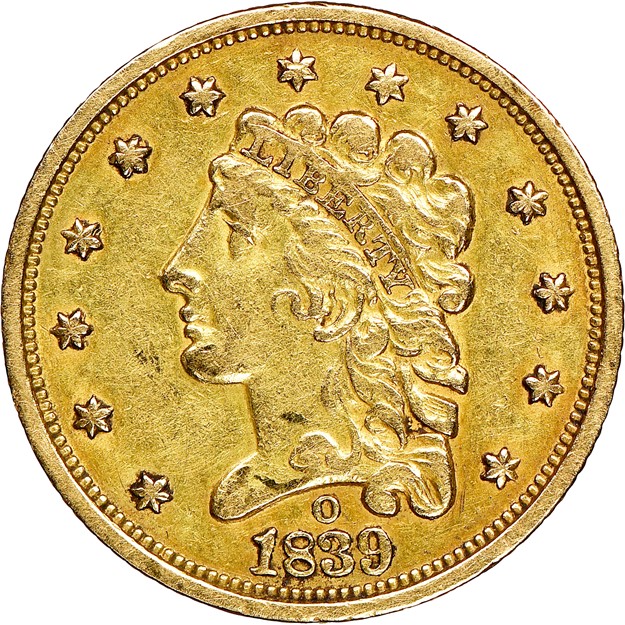
| An 1839-O Quarter Eagle Click images to enlarge. |
|
The New Orleans Mint opened in 1838 to take advantage of the strategic port location and the economic importance of the city. In 1861, the mint's operations were discontinued after it was seized by Confederate forces, who used the building as quarters for its troops. In 1862, Union forces recaptured the city, eventually reopening the building as a US assay office.
For a short time, the building was used as a federal prison. In 1879, coinage resumed and continued until 1909. Today, the building still stands on the northeastern edge of the French Quarter, serving as a branch of the Louisiana State Museum. The mintmark for New Orleans is the letter "O." The New Orleans Mint produced both gold and silver coins in varying mintages (rare to common), generally of good quality but often softly struck.
With gold at record levels, now is a great time to consider coins less tied to their melt value. Regardless of what gold bullion prices do, Southern gold coins have proven their long-term value as collectibles. With supply drying up, this part of the US gold market is poised for even further price appreciation. There are many ways to collect Southern gold, and we will examine that in another article in the near future.
Want to see more articles like this? Subscribe to the free NGC Weekly Market Report.
