NGC Ancients: Birds
Posted on 11/18/2025
Instantly recognizable, birds have been a powerful motif from the dawn of coinage up until the modern times, including the US Quarters that used the national symbol of the eagle for most of the 20th Century. Birds on ancient coins were often associated with mythology, including the most powerful gods and goddesses. Let's take a look at some examples.
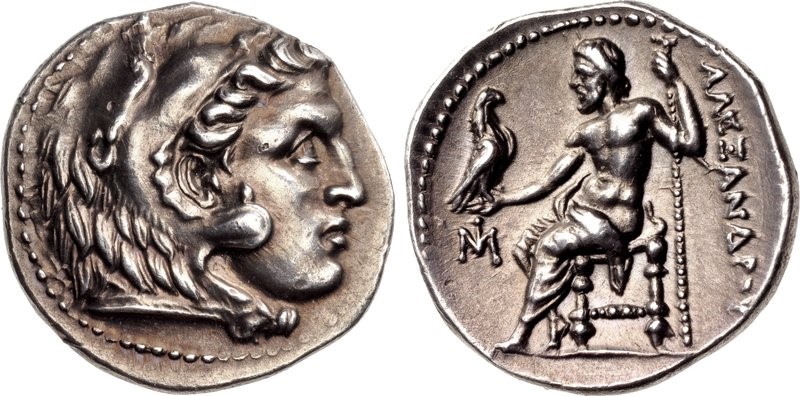 |
This silver drachm struck at Miletus, in Ionia, in the early 3rd Century B.C. shows Heracles on the obverse and Zeus Aëtophoros, or Zeus the eagle bearer, on the reverse. This design was popularized by the Macedonian king Alexander III "the Great" (336-323 B.C.).
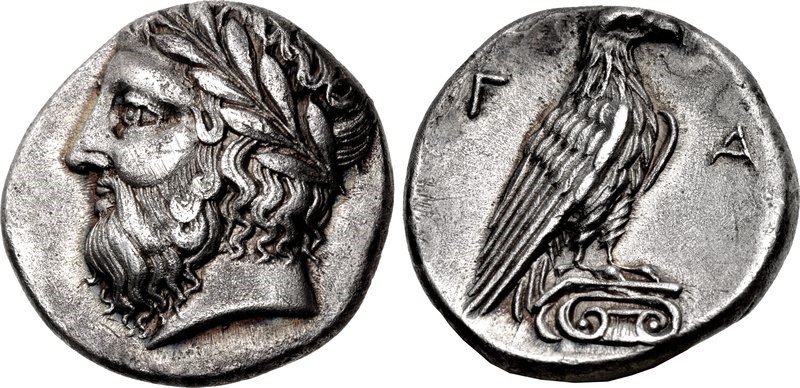 |
Struck for the 105th Olympiad in 360 B.C., this silver stater of Olympia shows Zeus on the obverse and an eagle perched on a column on the reverse. As the chief god of the ancient Greek pantheon, Zeus ruled the sky, so it's not hard to see how a large and majestic bird of prey came to be associated with him.
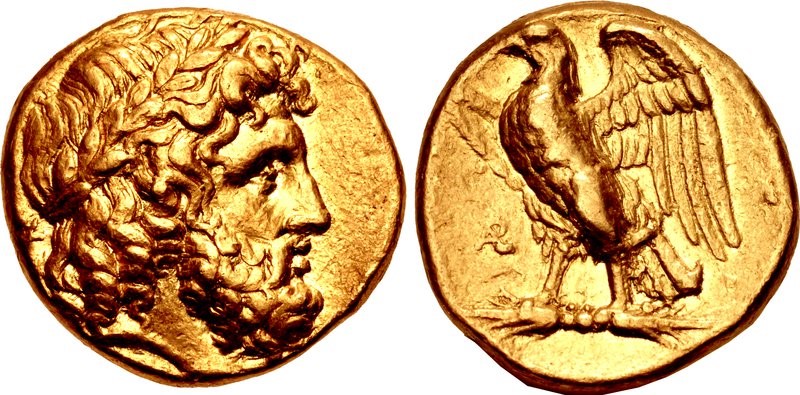 |
Zeus appears opposite an eagle again on this gold stater issued at Taras in Southern Italy c.276-272 B.C. This time, however, the eagle stands on a thunderbolt, another symbol of Zeus. Located near the southeastern tip of Italy, Tarentum was conquered by the Romans soon after this coin was struck.
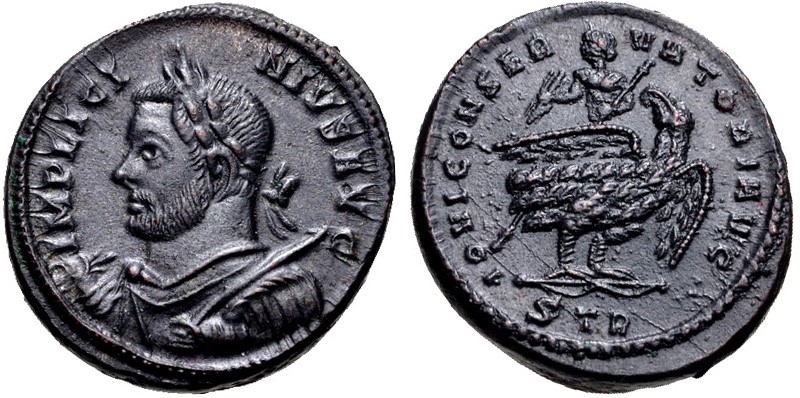 |
Jupiter was the Romans the equivalent of Zeus to the Greeks – the chief god, in charge of the heavens, represented by an eagle and a thunderbolt. This billon argenteus struck under Roman Emperor Licinius I (A.D. 308-324) shows his bust opposite Jupiter grasping a thunderbolt while sitting on an eagle.
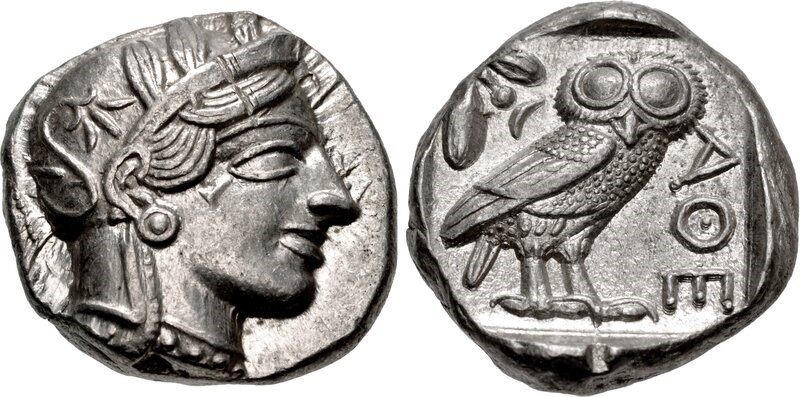 |
Athena, the goddess of war and wisdom and the protector of Athens and many other Greek cities, is closely associated with the owl. This silver tetradrachm struck c. 454-404 B.C. for Athens belongs to one of the most recognized series of ancient Greek coins. Nicknamed the "Athenian owl," it shows Athena on the obverse and her owl on the reverse.
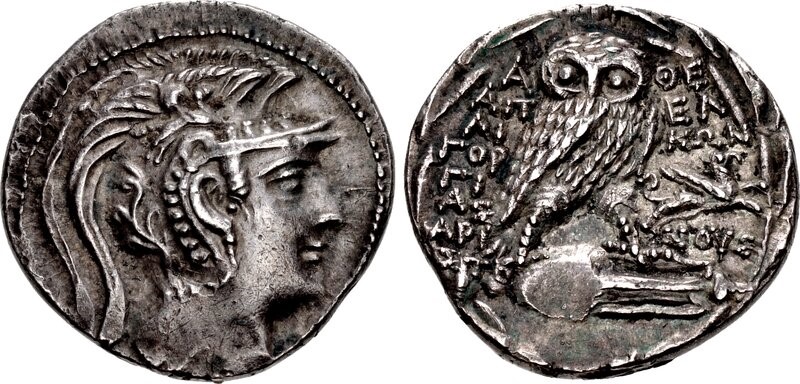 |
Also from Athens is this ‘New Style’ tetradrachm. With its forward-facing eyes — similar to that of a human's — the owl has long been associated with wisdom. This silver tetradrachm is believed to have been struck in 88 or 87 B.C., a time when Athens was dealing with a humbling loss of autonomy.
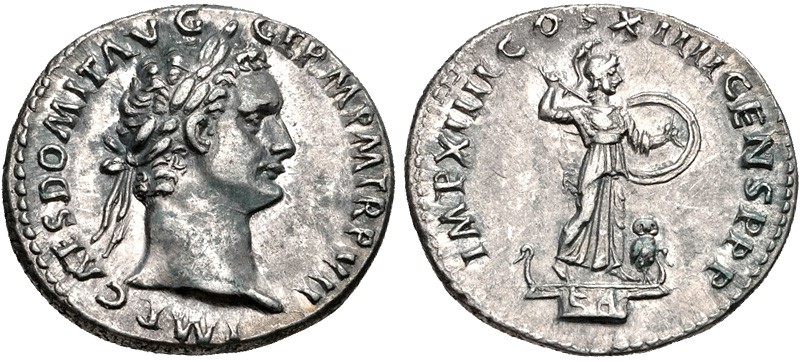 |
This silver denarius of the emperor Domitian (A.D. 81-96) shows Minerva (Athena's Roman counterpart) standing on a column decorated with ship prows, with an owl at her feet. The owl of Athena and Minerva is the Athena noctua, a smaller species with a wingspan of less than two feet. It can be found in an area extending from Spain to North Korea.
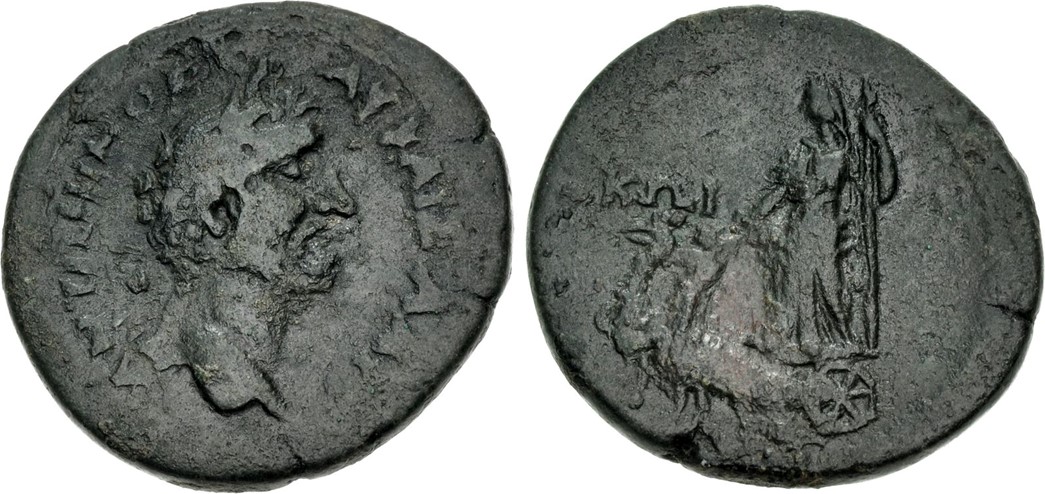 |
Hera, the chief goddess of the Greeks (and the wife of Zeus) counts the peacock among her symbols. This base-metal coin struck on Cos, an island off the coast of modern Turkey, during the reign of the emperor Antoninus Pius (A.D. 138-161) shows Hera driving a biga of peacocks.
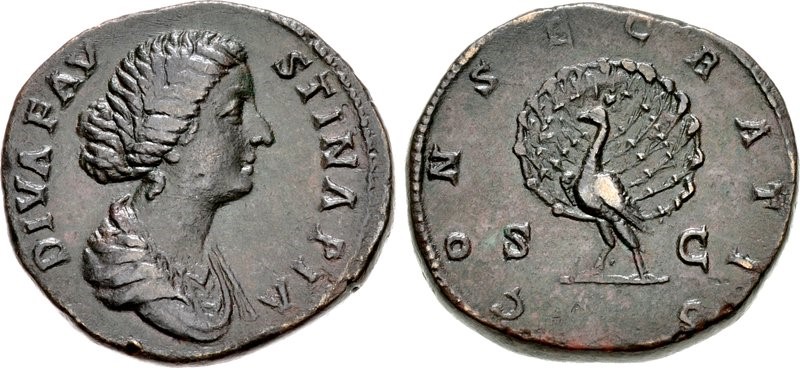 |
Hera's Roman equivalent is Juno, who was the goddess of marriage, in addition to being the queen of the gods. The peacock was sometimes used on consecration issues for powerful Roman women who were posthumously inaugurated as divine. Among them was Faustina Junior, who died in A.D. 175/6. This brass sestertius was issued by her husband, Emperor Marcus Aurelius.
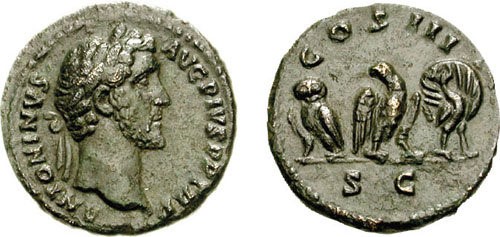 |
The owl, eagle and peacock appear together on this base-metal quadrans struck in the A.D. 140s under Emperor Antoninus Pius. When this coin was struck, Roman religion centered on the Capitoline Triad of three gods — Jupiter, Juno and Minerva — whose birds represent them on this coin.
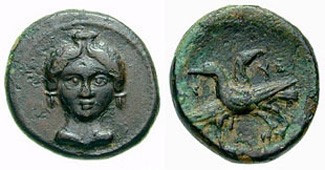 |
Crows are depicted on the reverse of this 16mm base-metal coin struck around the 3rd Century B.C. in Laos, a city in southern Italy. On the obverse is Demeter, the Greek goddess of agriculture.
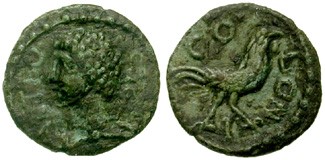 |
This 12mm base-metal coin was struck in Antiochia, Pisidia, sometime in the 1st Century B.C. or the 1st Century A.D. Its obverse shows the bust of Hermes, the herald of the gods, while the reverse shows a rooster, a bird associated with him.
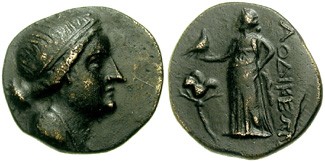 |
This 17mm base-metal coin shows Aphrodite, the goddess of love and beauty, holding a dove, the bird most closely associated with her. This coin was struck in Laodicea, Phrygia, in the 1st or 2nd Century B.C.
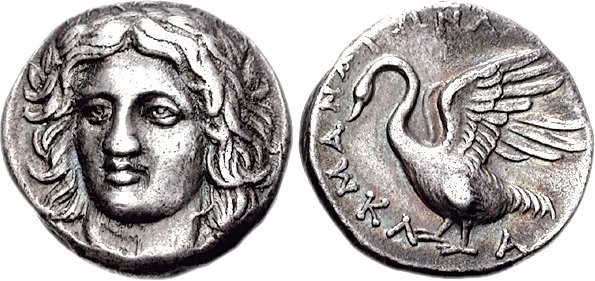 |
Struck c.380-360 B.C. at the city of Clazomenae in Ionia, this silver drachm shows sun god Apollo opposite his bird, the swan. In mythology, swans circled the island where his mother gave birth to Apollo, and his father Zeus later gifted him a heavenly chariot drawn by swans.
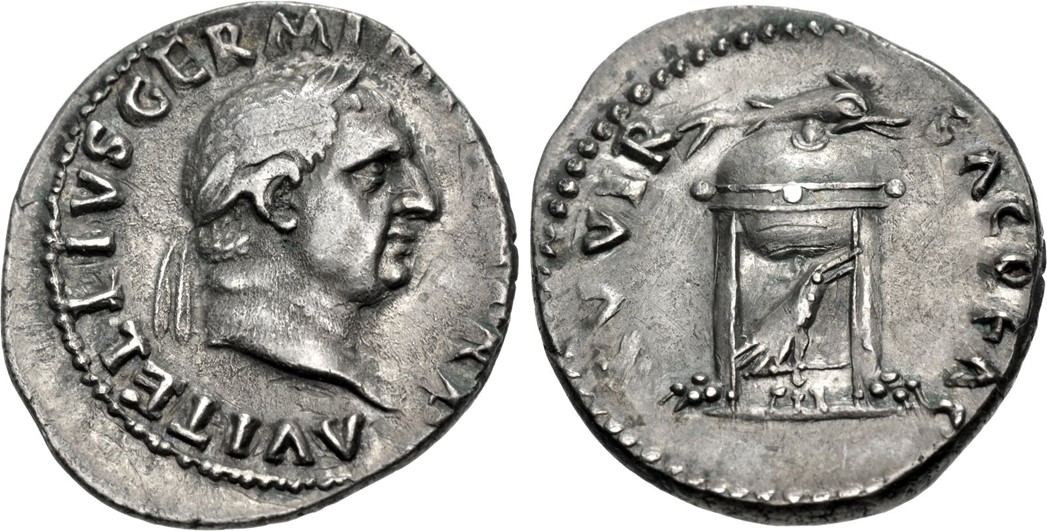 |
A raven is depicted on this silver denarius struck for the emperor Vitellius, who ruled for a few months in A.D. 69. The raven, like the tripod and dolphin, is associated with Apollo.
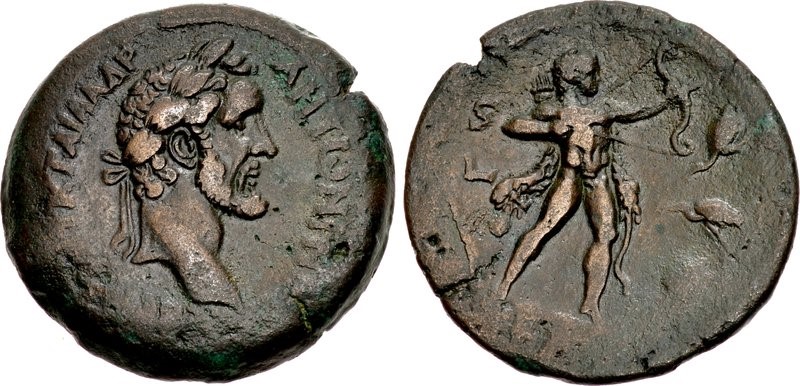 |
The Sixth Labor of Heracles was defeating the Stymphalian birds, who terrorized an area of ancient Greece. This base-metal drachm struck for the emperor Antoninus Pius in A.D. 142 or 143 shows Heracles shooting them with arrows, which, according to legend, he’d dipped in the poisonous blood of the Hydra.
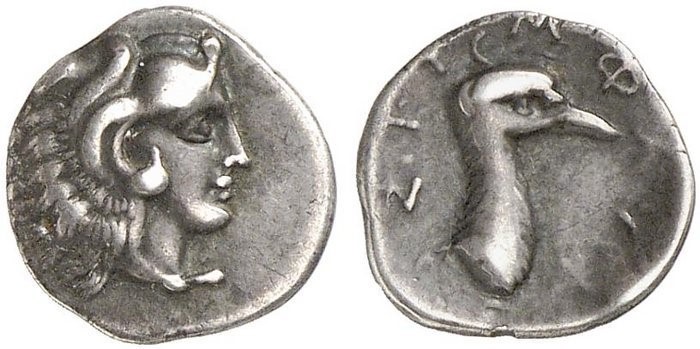 |
At Stymphalus, a city in Arcadia, the region which the Stymphalian birds inhabited, this silver obol was struck sometime between 370 and 350 B.C. It shows Heracles on the obverse and a bird's head on the reverse.
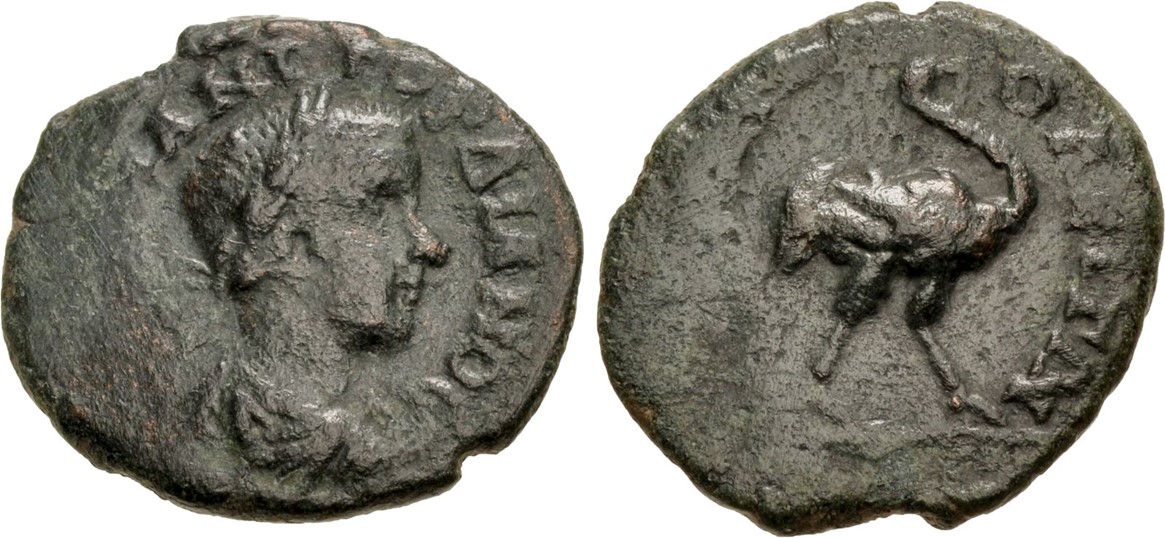 |
Other birds also appear on ancient coins. An ostrich appears on this base-metal coin struck at Hadrianopolis, in Thrace, for the emperor Gordian III (A.D. 238-244). Ostriches are associated with Africa today but were also found in the ancient Mideast before they went extinct in the region.
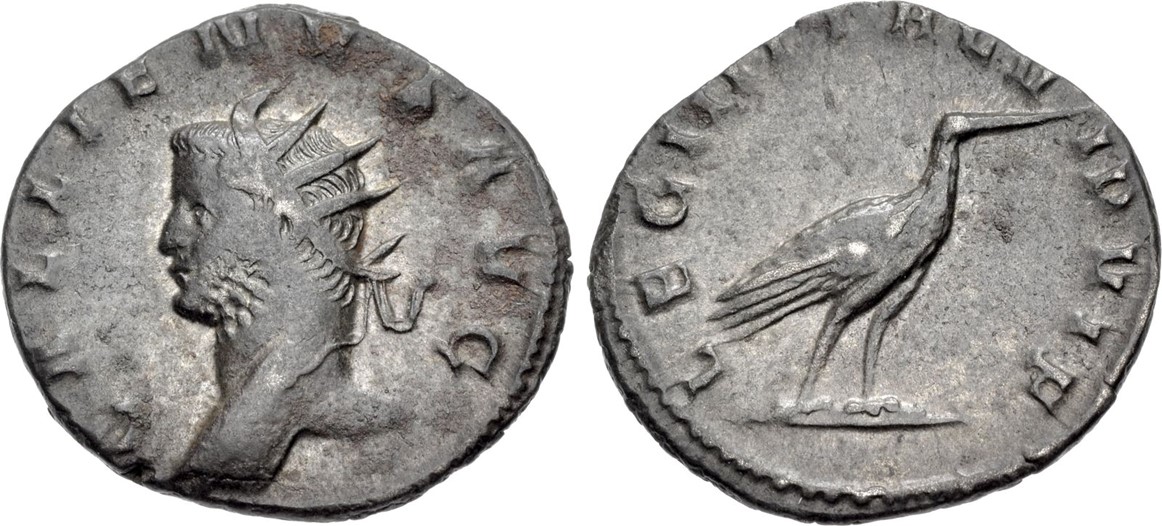 |
A stork is depicted on this billon double-denarius struck under Emperor Gallienus (A.D. 253-268). The stork was a symbol used by a legion stationed in modern-day Germany.
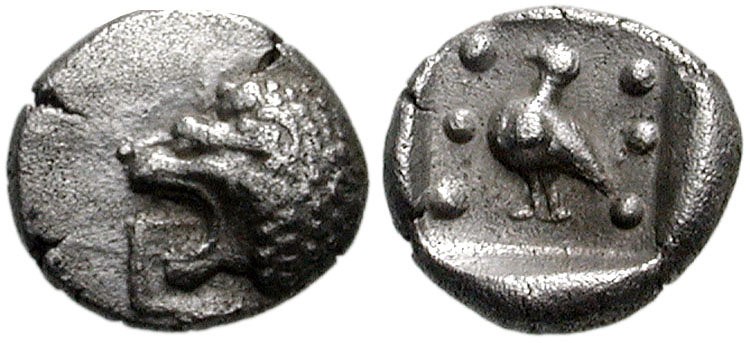 |
Struck c.525-494 B.C. at Miletus, a city in Ionia, this silver fraction, perhaps a tetartemorion, shows a lion head opposite a standing bird surrounded by six pellets. The type of bird is not certainly known, but is often identified as an eagle or a quail.
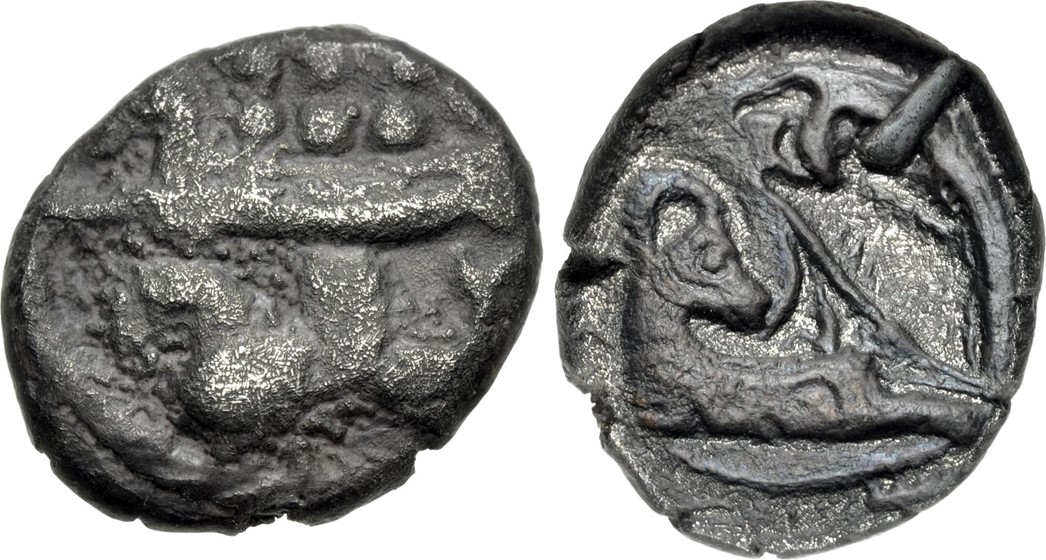 |
One of the more intimidating scenes of birds on ancient coins occurs on this silver quarter-shekel of Byblus, Phoenicia. Struck c.433-425 B.C., it shows a vulture, rendered in incuse, looming over a ram.
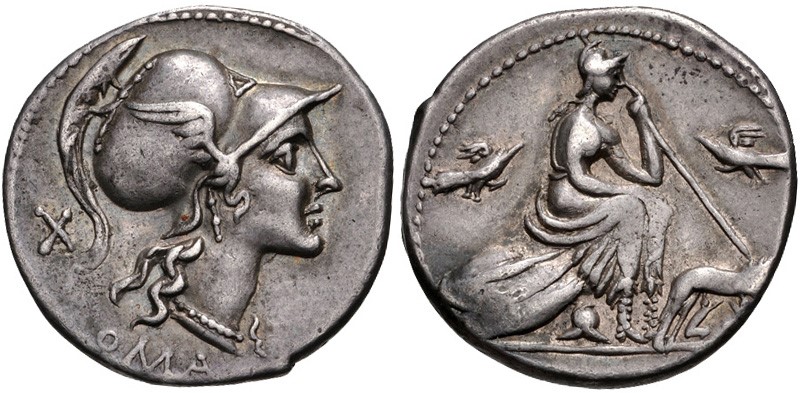 |
We’ll finish with a silver denarius of the Roman Republic, struck c.115-114 B.C. It shows Roma on both sides, with birds in flight around her on the reverse. At first glance, it might seem like a fairy tale scene, yet it’s a solemn depiction of Roman foundational mythology, with the goddess sitting on a pile of shields, holding a spear and keeping watch over a she-wolf who suckles Romulus and Remus, the legendary founders of Rome; the birds of augury flying around her foretell the victory of Romulus over his brother.
All images are from Classical Numismatic Group.
