NGC Ancients: Astronomy, Part 1
Posted on 2/18/2025
One of the most exciting astronomical events of the decade is The Great Planetary Alignment of 2025. Just after sunset on February 28, seven planets will be observable in what some are calling a “planetary parade” in the sky — though only Mercury, Venus, Mars and Jupiter will be visible to the naked eye.
Ancient people were fascinated by what happened in the sky. They learned that the constellations changed as the seasons progressed while five points of light seemed to chart their own course. Today these are called planets, after the Greek word for wanderer. When something unusual happened in the nighttime sky, people took notice.
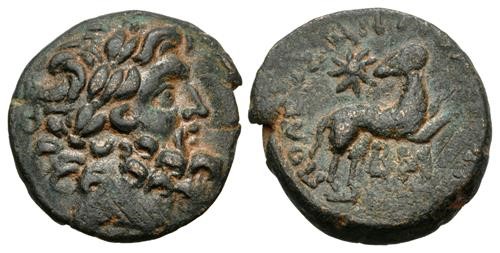 |
One of the most famous events in the minds of modern audiences is from the Gospel of Matthew, which tells of the Star of Bethlehem that led the Wise Men to Judaea to seek a newborn king, ultimately leading them to Jesus. Astronomers have offered various explanations for the Star of Bethlehem, which include the possibility that it was a comet or a supernova. Another hypothesis is that it refers to the Jupiter’s occultation in Aries (meaning it was blocked from view by the moon while in the constellation Aries) in 6 B.C.
This event may be captured on a bronze coin struck in Antioch late in the reign of the Roman emperor Augustus (27 B.C.-A.D. 14). The obverse shows Zeus (the Greek equivalent of Jupiter), while the reverse shows a star over a ram, which is the animal seen in the constellation Aries.
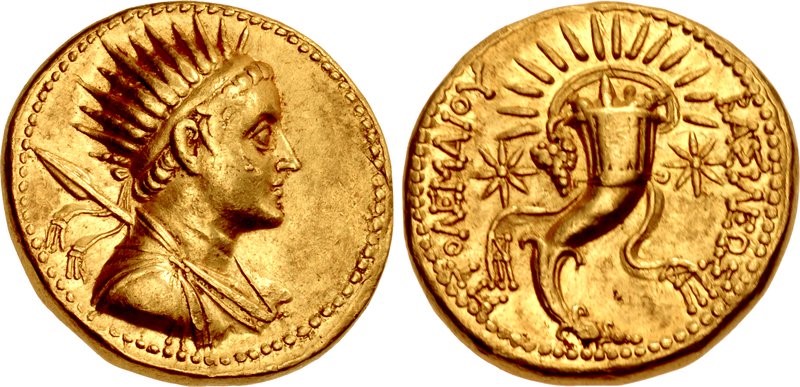 |
Two centuries earlier, in 210 B.C., two comets were associated with the birth of Ptolemy V Epiphanes and his ascension to the throne of the Egypt-based Ptolemaic Kingdom in 205/4 B.C. This gold mnaieion struck during his rule (205/4-180 B.C.) shows the young king wearing a radiate crown on the obverse, while the reverse shows a radiate cornucopia flanked by a star on each side, possibly a reference to these comets.
 |
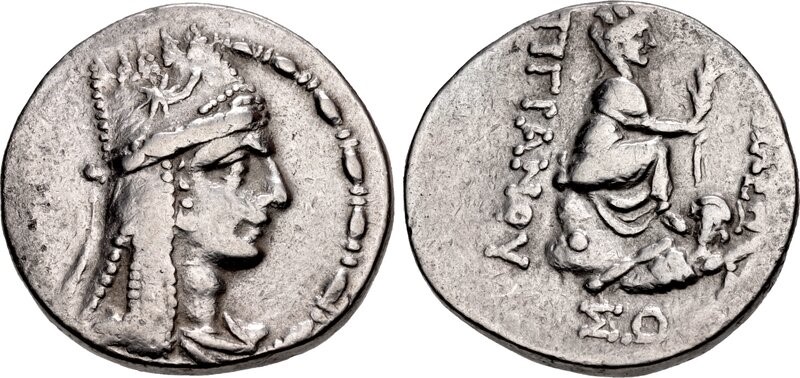 |
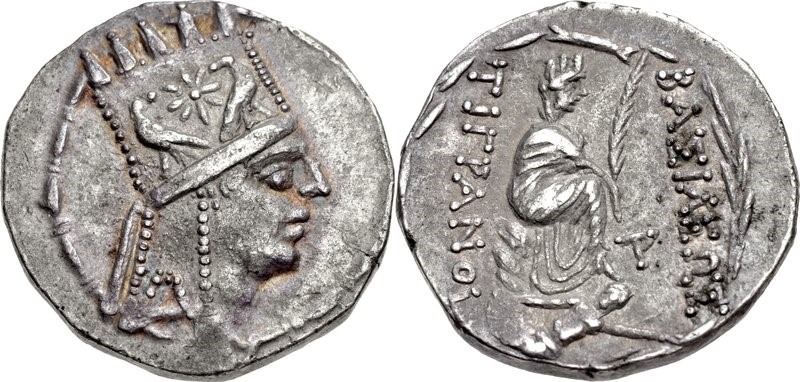
A similar theme can be seen on the obverse of these silver tetradrachms struck under Armenian King Tigranes II (95-56 B.C.), and his son, Tigranes the Younger (c.77/6-66 B.C.), who rebelled against his father. A comet appears on the tiara of each, a possible reference to Halley’s Comet in 87 B.C. or, in the case of the rebellious son, to a birth-sign comet of 100 B.C. or a comet of 76 B.C., at the time of his coronation.
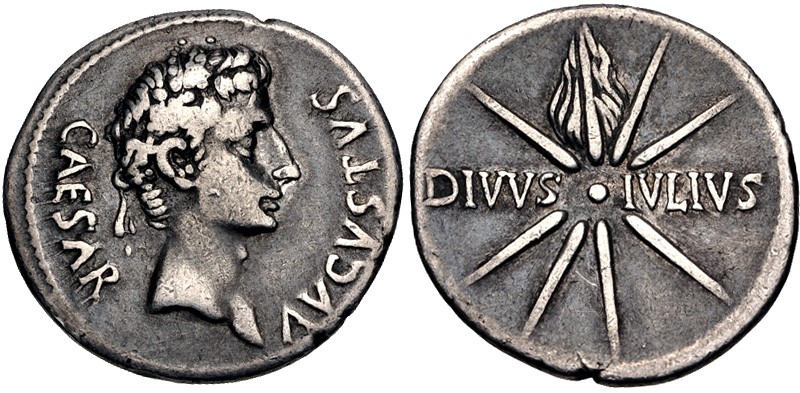 |
The most famous comet of ancient Rome is what has become known as Caesar's Comet, which appeared in the sky weeks after his assassination on the Ides (15th) of March, 44 B.C. The comet (called “Sidus Iulium,” the Julian Star) was bright enough to be seen in the daytime and was interpreted as a sign of Caesar's deification. The propaganda surrounding the comet helped propel Octavian (Caesar’s great-nephew and adoptive son) in his bid for power and is shown on this silver denarius struck c.19-18 B.C., during his reign as Emperor Augustus.
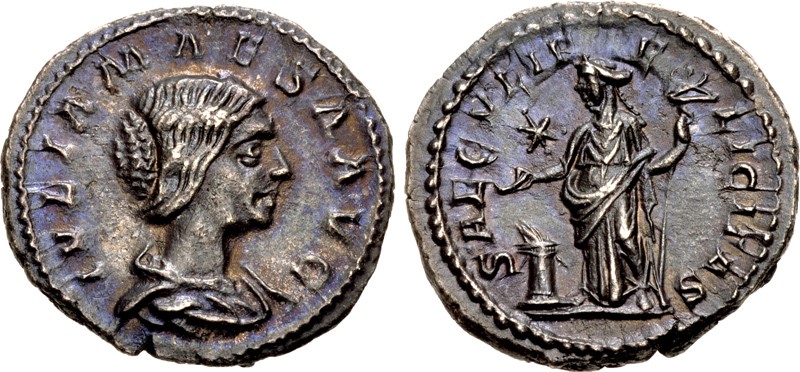 |
Another comet can be seen on a silver denarius of Julia Maesa, the grandmother of Emperor Elagabalus (A.D. 218-222). The comet on the reverse may be Halley’s Comet, which appeared in A.D. 217 and is named after an English astronomer who first determined that several comet observations since ancient times were simply the same comet appearing once every 75 years or so. Halley’s Comet is expected to return in July, 2061.
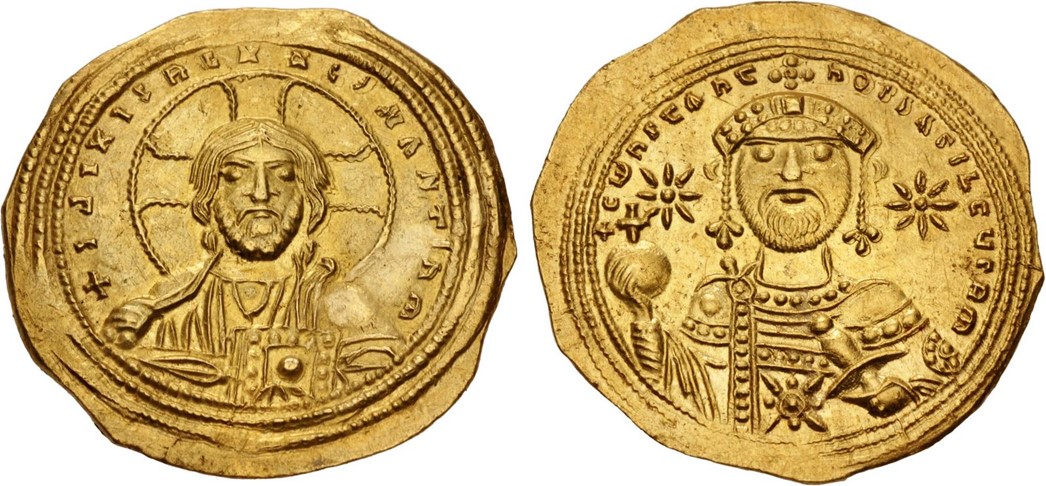 |
This gold histamenon nomisma issued late in the reign of Byzantine Emperor Constantine IX Monomachos (A.D. 1042-1055) shows Christ on the obverse and the emperor flanked by stars on the reverse. The design may have been inspired by a supernova in 1054 that gave birth to the Crab Nebula. Another supernova, one of the brightest ever observed, occurred in 1006, when the emperor was young.
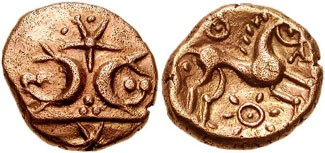 |
Many ancient people studied the stars, including the Iron Age inhabitants of Britain. This Iceni gold stater, struck 45 to 40 B.C., shows two crescents (possibly inspired by the fish in the constellation Pisces) with a five-pointed star on the obverse, while a horse above a solar flower is depicted on the reverse. The Druids, the spiritual leaders of many Celtic tribes, earned a reputation for their expertise in astronomy.
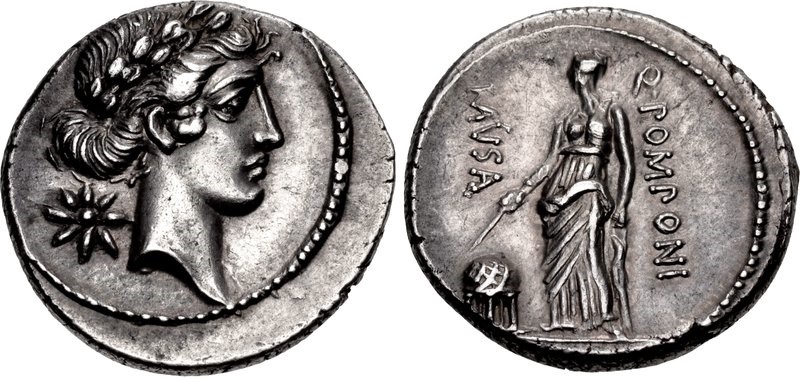 |
In the Greco-Roman world, astronomy was so important that one of the nine muses was dedicated to it. Urania, the muse of astronomy, is shown pointing a wand at a globe on this silver denarius issued by the moneyer Q. Pomponius Musa in 56 B.C. (To learn more about the Muses on ancient coinage, check out this NGC Ancients column.)
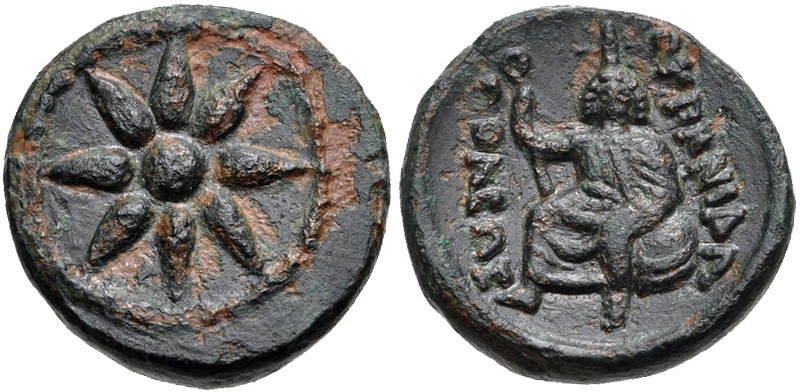 |
This base-metal coin struck c.300 B.C. at Uranopolis in Macedonia shows a star opposite Aphrodite Urania, the heavenly version of the goddess Aphrodite, believed to have been the daughter of sky-god Uranus. When the seventh planet from the sun was discovered in 1781 (the first to have been found since ancient times), it was given the name Uranus.
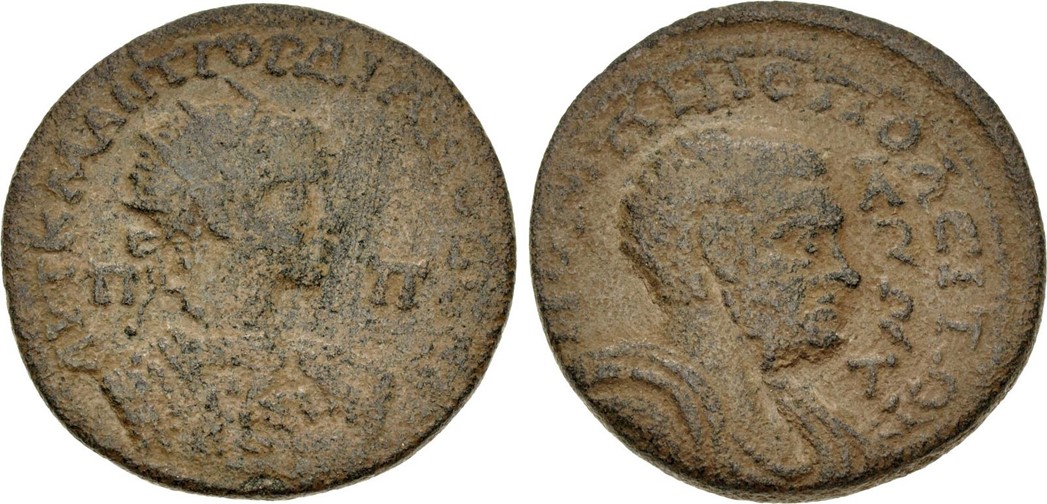 |
The poet Aratus is believed to be portrayed on the reverse of this bronze coin struck during the reign of Roman emperor Gordian III (A.D. 238-244) at of Soloi-Pompeiopolis in Cilicia. Aratus was born in this city on the southern coast of what today is Turkey. While serving in the court of a Macedonian king in the 3rd Century B.C., he wrote a poem called Phenomena that described the constellations and gained widespread popularity.
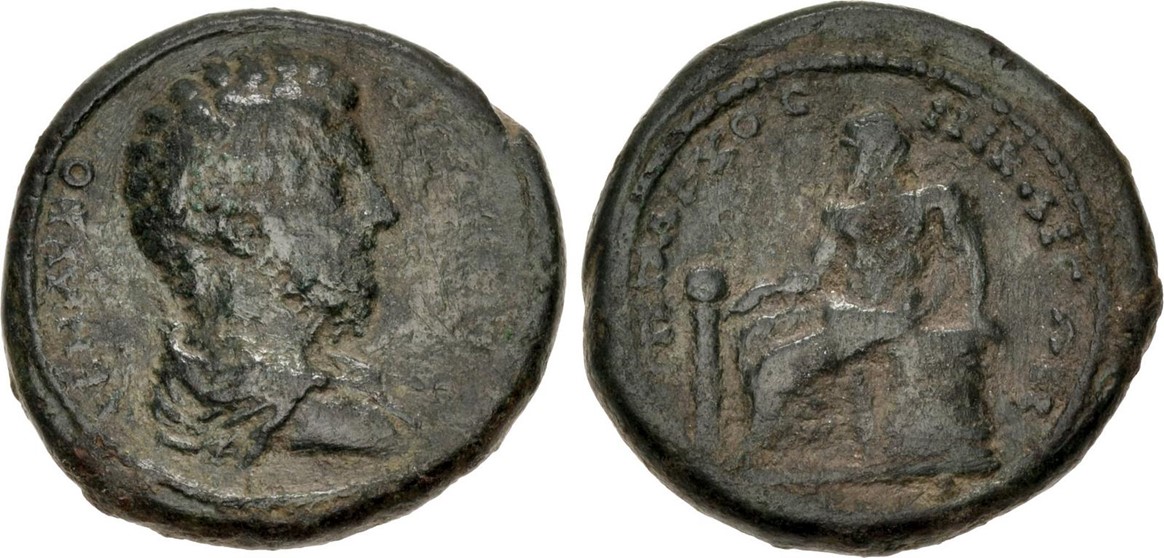 |
The reverse of this bronze diassarion, struck under Emperor Commodus (A.D. 177-192) at Nicaea in Bithynia, shows the seated figure of Hipparchus the astronomer pointing to a globe on a column. Working in the 2nd Century B.C., Hipparchus compiled the first star chart, figured out the precession of the equinoxes and calculated the size of the sun and moon. He is regarded as the ancient world’s greatest astronomer.
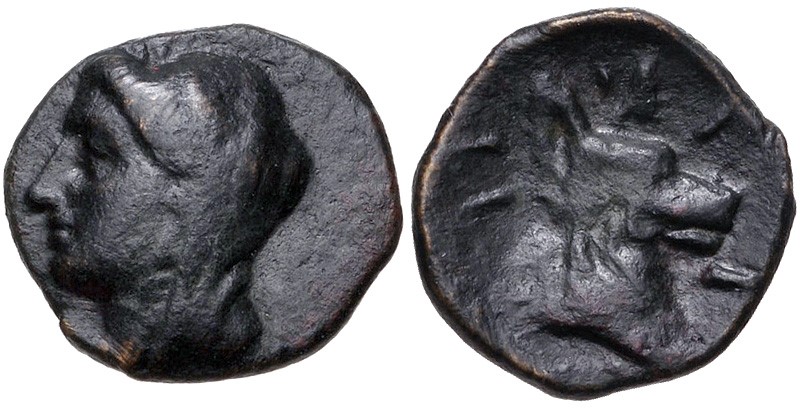 |
This base-metal chalkous struck in Thebai, Thessaly, in the 3rd Century B.C. shows Sirius, the “dog star.” The brightest star in the nighttime sky, Sirius resides in the Canis Major constellation. As the Earth orbits the sun, different stars become visible in the sky. The Greeks associated Sirius’ rising with the hot and dry “dog days of summer,” while Egyptians understood the connection between the time that Sirius appeared and the annual flooding of the Nile.
The Egyptian calendar set Sirius’ rising at the beginning of the year, but because it was only 365 days long (and didn’t have a leap day every four years), it meant that over time the calendar and the stars in the heavens became disconnected. However, once every 1,460 years, the actual rising of Sirius lined up with the calendar, completing what is called a Sothic Cycle.
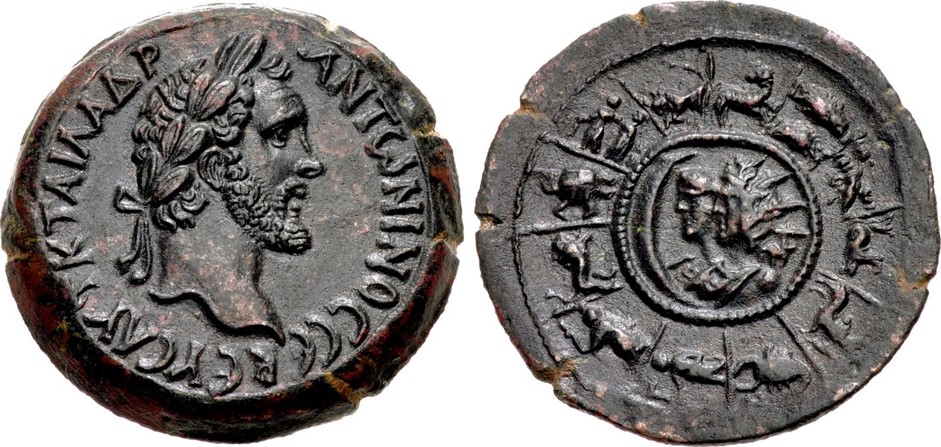 |
This rare event occurred early in the reign of Roman Emperor Antoninus Pius (A.D. 138-161), prompting a celebration of astronomy on his coinage issued in Alexandria, Egypt. The reverse of this bronze drachm shows a zodiac, with the constellation Aries at the top and proceeding through the other 11 signs counterclockwise. Helios and Selene, the deities of the sun and moon, are shown at center.
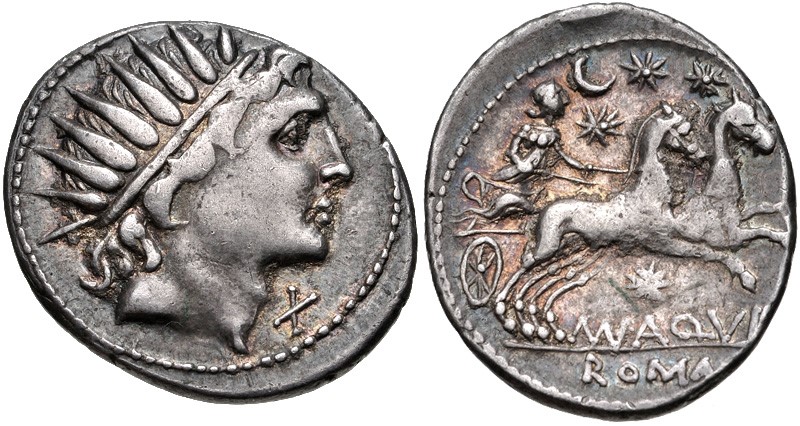 |
Both the sun-god Sol (Helios) and the moon-goddess Luna (Selene) appear on this silver denarius struck under Roman moneyer Mn. Aquillius in 109-108 B.C. Sol is portrayed on the obverse wearing a radiate crown, while Luna drives a two-horse chariot through the heavens, represented by a crescent moon and four stars.
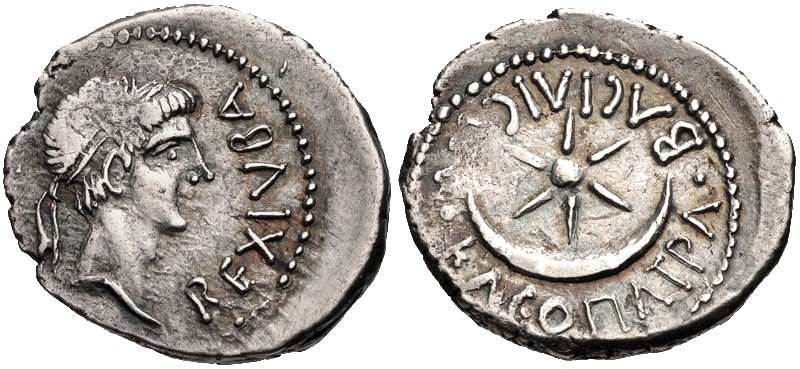 |
Marc Antony and Cleopatra named their twins after sun and moon deities: Alexander Helios and Cleopatra Selene. After their parents’ deaths left Augustus as the supreme Roman ruler, he paraded the children through the streets of Rome in sun and moon costumes with chains so heavy that the crowds unexpectedly felt sympathy for them. Cleopatra Selene was later married to the Mauretanian king Juba II, a reliable Roman ally in North Africa. A star and moon appear on this silver denarius issued during his half century of rule beginning in 25 B.C.
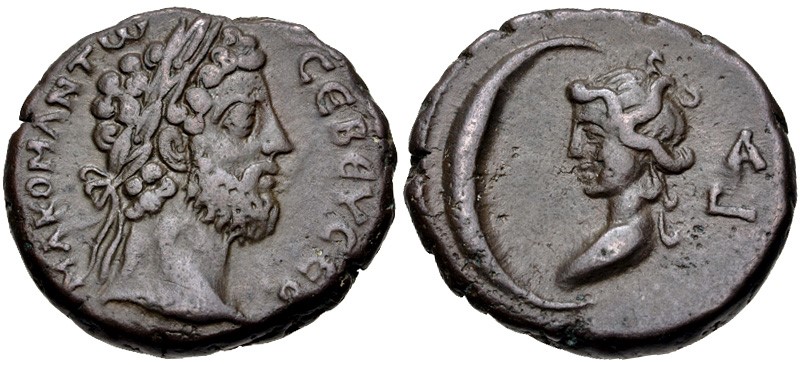 |
The moon goddess Selene is portrayed with a crescent moon on this billon tetradrachm issued in Alexandria under the emperor Commodus.
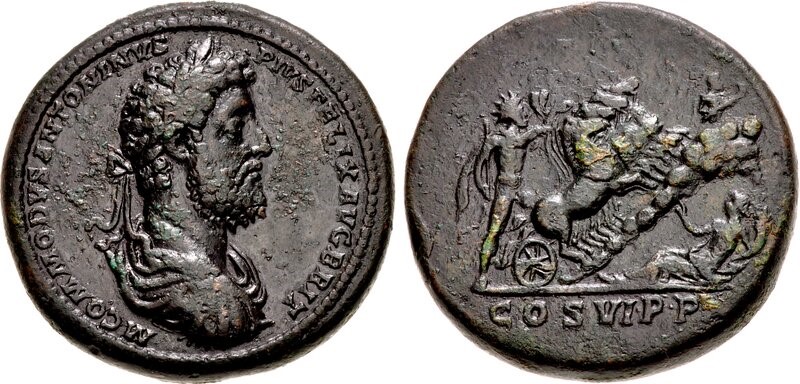 |
This base-metal medallion issued under Commodus shows Sol, the Roman equivalent of Helios, driving a four-horse chariot into the clouds. In the sky is Lucifer, the morning star. Tellus, representing Earth, reclines below, at the right of the scene.
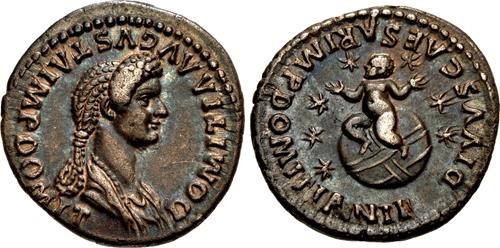 |
This obverse of this silver denarius of A.D. 82-83 shows Domitia, wife of Roman Emperor Domitian (A.D. 81-96), while the reverse shows their only son, who is believed to have died young. The emperor had his boy deified, with his memory preserved in coins like this one, which shows him in the guise of the infant Jupiter sitting on a globe amid the stars.
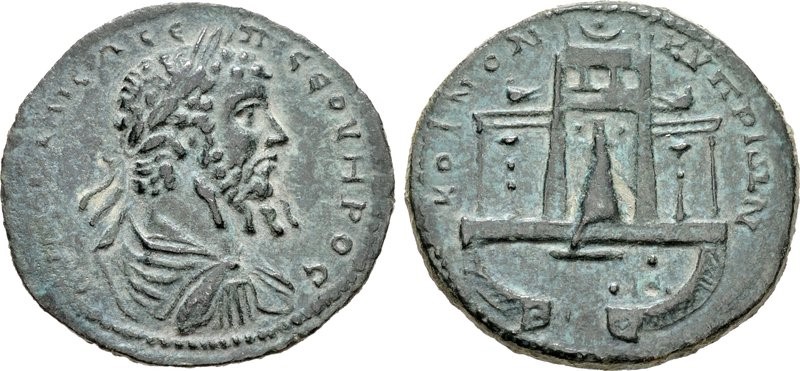 |
Objects that fall from the heavens and survive the fiery trip through the Earth's atmosphere are called meteorites. One such meteorite found itself converted to a cult object that was enshrined at the temple of Aphrodite at Paphos on the island of Cyprus. It appears on the reverse of this base-metal coin struck on Cyprus for the Roman emperor Septimius Severus (A.D. 193-211).
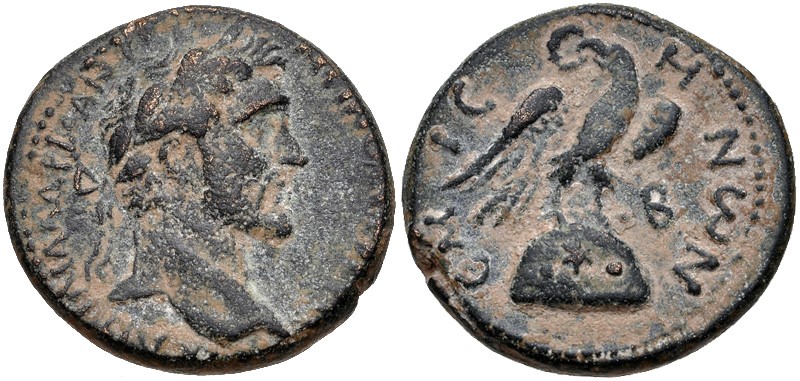 |
Another meteorite is depicted on this base-metal coin struck under the emperor Antoninus Pius in Seleucis and Pieria, Syria. The reverse shows an eagle on a large black meteorite called the Baetyl of El-Gabal. Emperor Elagabalus (A.D. 218-222) earned his name because he was the high priest of El-Gabal, a sun god in the Near East. A member of the Severan dynasty, Elagabalus came to power as a teenager in 218, but his fanaticism for his religion and his scandalous behavior alienated Romans.
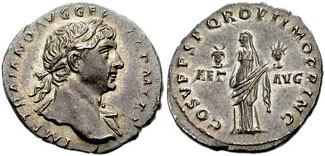 |
Aeternitas, the Roman goddess of eternity, is shown on the reverse of this silver denarius struck for Emperor Trajan (A.D. 98-117). She holds the heads of the sun and the moon – the two brightest objects in the sky.
In the next column, we'll take a closer look at the 12 constellations of the zodiac.
Images courtesy of Classical Numismatic Group.
