NGC Conservation: Breaking the Pattern of Residue
Posted on 2/18/2025
Numismatic Guaranty Company® (NGC®) uses a variety of proprietary techniques to remove harmful contaminants, stabilize and protect a coin's surfaces and, in many cases, improve a coin's eye appeal. After coins are conserved, they are then graded and encapsulated. Below are a few highlights of coins that were conserved and graded by NGC recently.
J-2132 Half Dollar
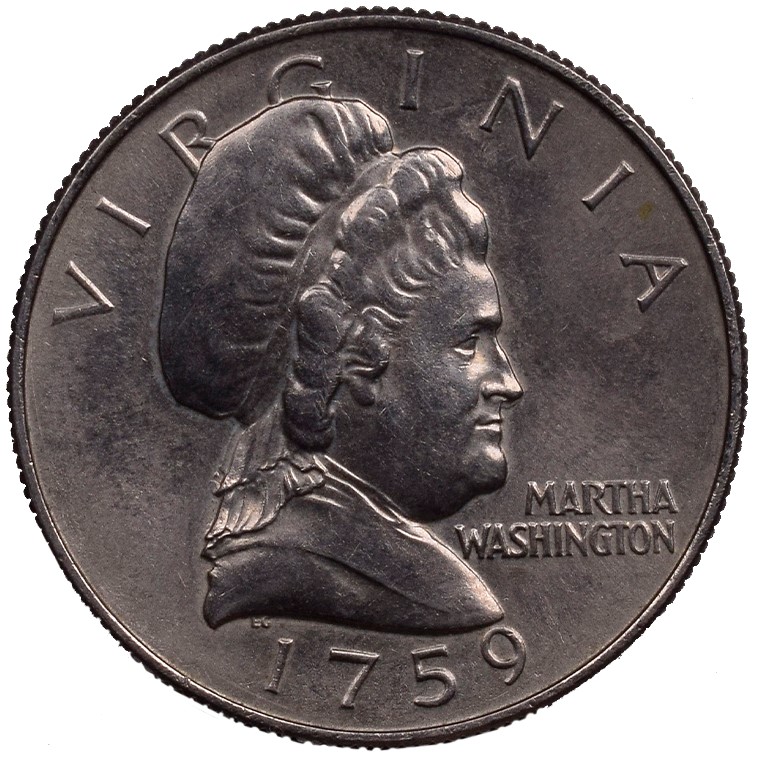
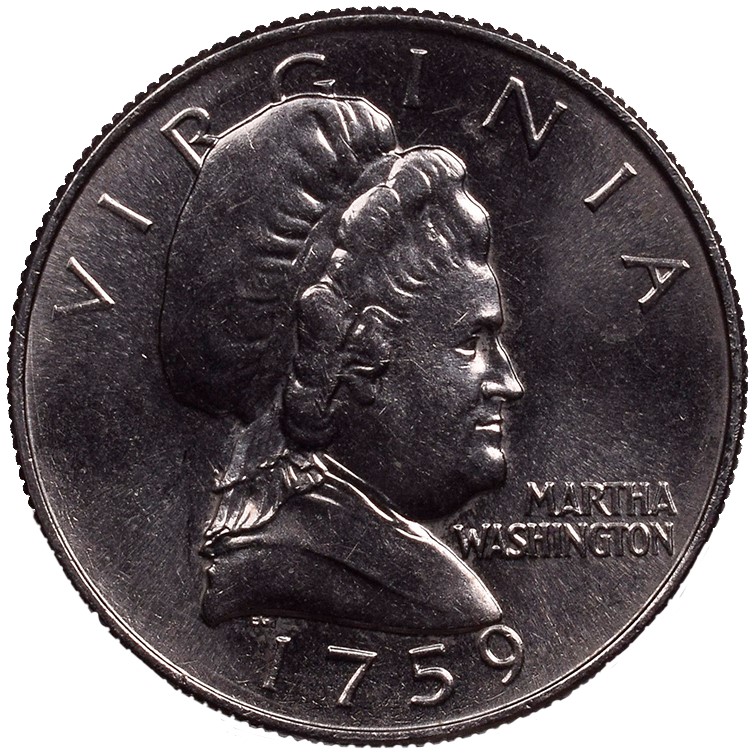
Even well-known pieces can develop detail-hiding residues. The Martha Washington patterns, such as the one here made with the specifications of a copper-nickel clad Half Dollar and attributed as Judd number 2132, were notably created to test new copper-nickel alloys for circulation coins in the 1960s (though this design was also used to test new coins several additional times in the following decades). Residues such as those on the surface of this piece are unattractive, but they also hide the true grading potential of a coin when submitted to NGC. Careful conservation work was required to remove the unattractive toning yet leave the surface beneath free of any scratches. Upon completion of careful conservation work, this important pattern coin was able to grade numerically with NGC.
 |
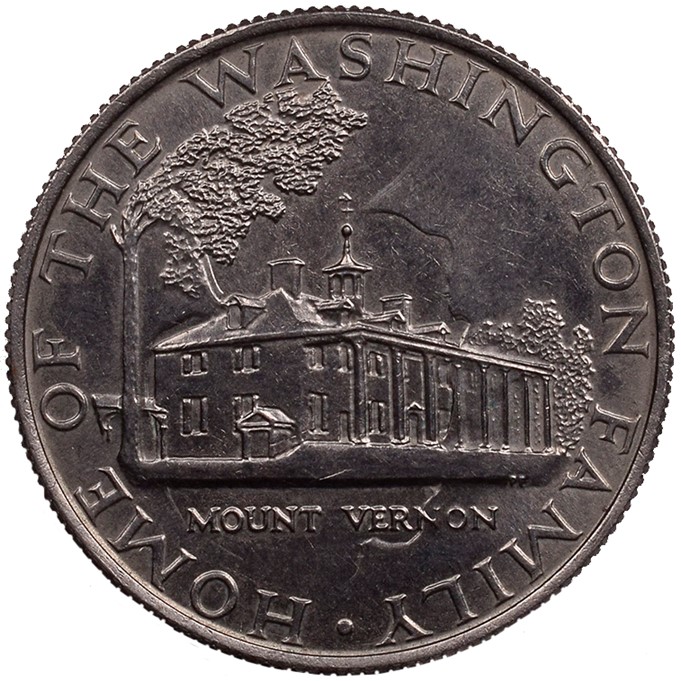 |
| 1759(1965) J-2132 Half Dollar Before conservation Click images to enlarge. |
|
 |
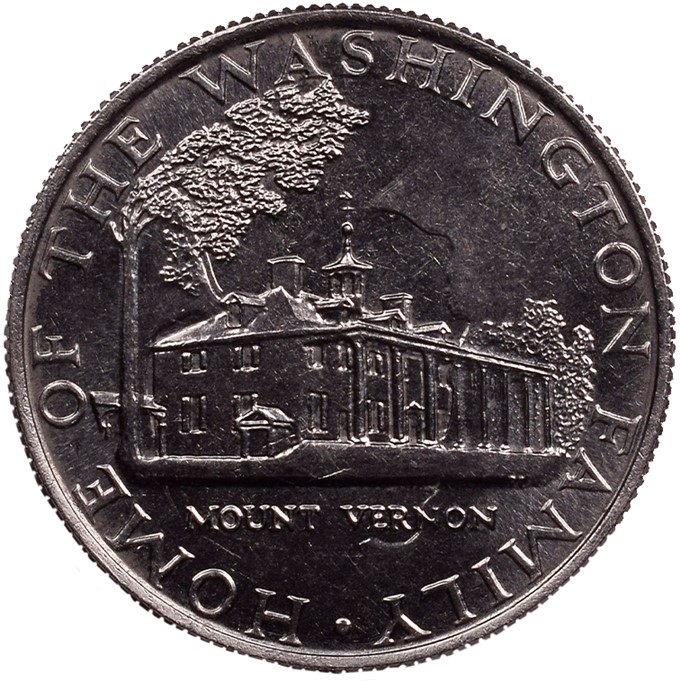 |
| 1759(1965) J-2132 Half Dollar After conservation Click images to enlarge. |
|
Netherlands 1987 Silver Pattern 50 Gulden
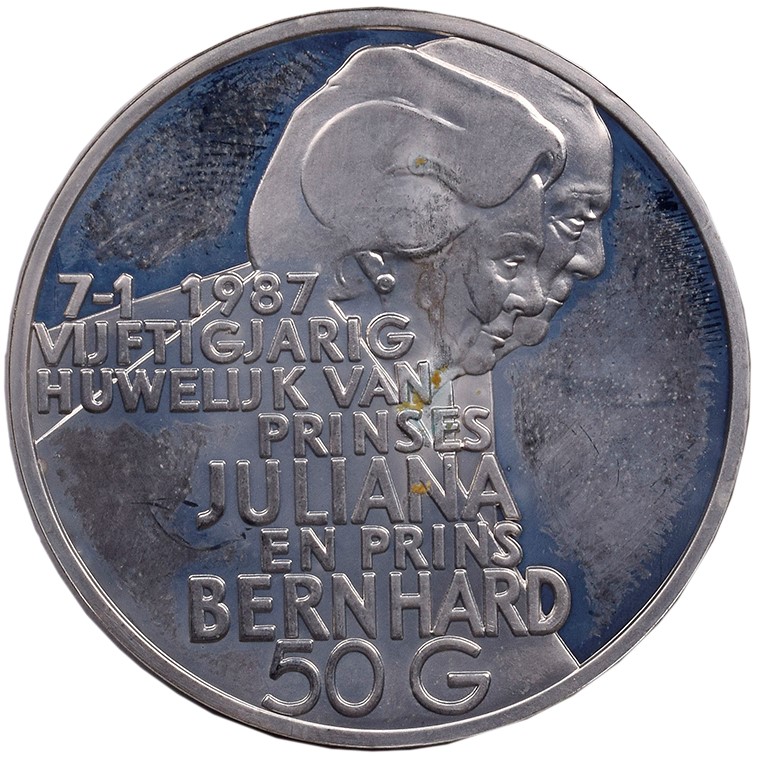
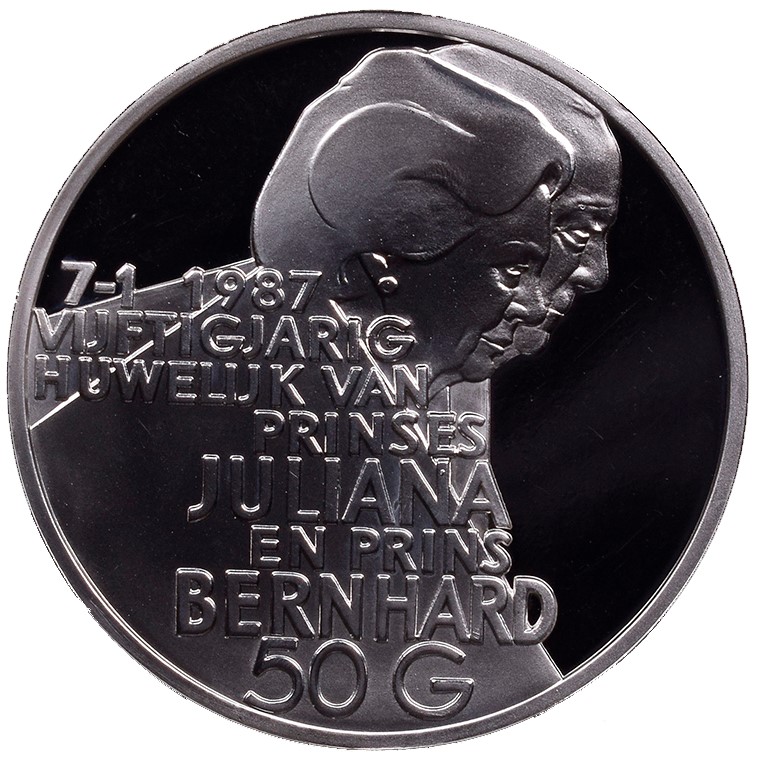
When residues form on modern coins, the results can oftentimes be quite visually appalling. This pattern for a commemorative 1987 Netherlands 50 Gulden came to NGC Conservation to remove a severe opaque residue that had developed in an uneven fashion over the entire surface. This pattern coin features a design honoring the royal golden anniversary that is different from the official commemorative coin issued in quantity in 1987. It may have developed this particular haze through handling as a potential design use. Removal of heavy residues like this require careful work to not damage the surface underneath. After successful residue removal, this coin was able to grade well with NGC.
 |
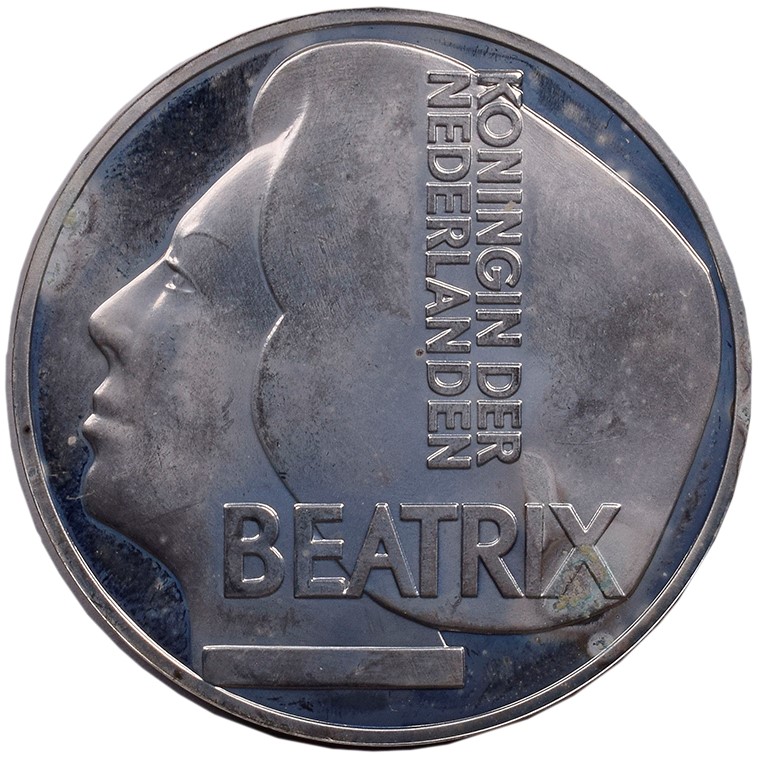 |
| Netherlands 1987 Silver Pattern 50 Gulden - Golden Wedding Anniversary Before conservation Click images to enlarge. |
|
 |
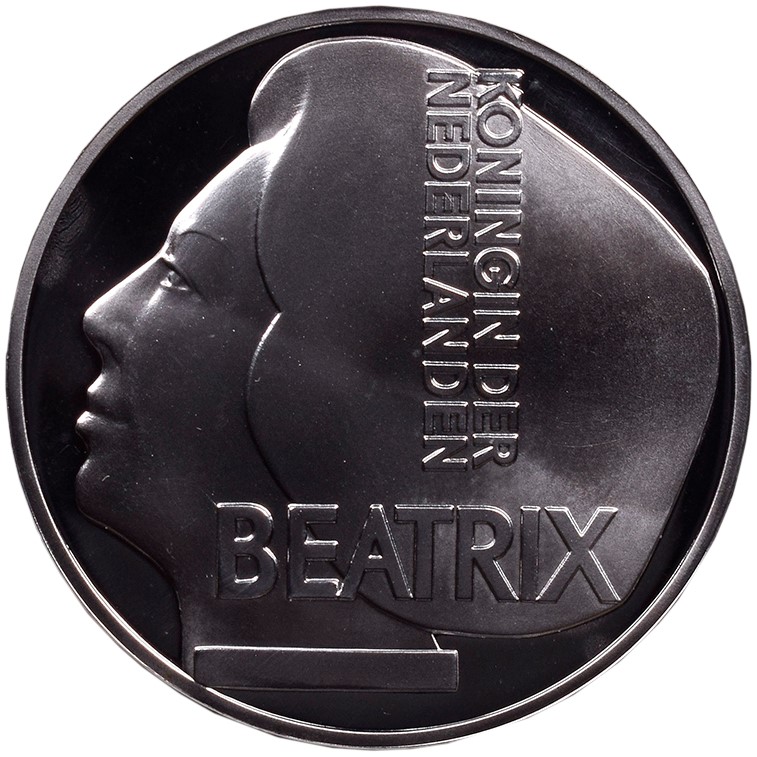 |
| Netherlands 1987 Silver Pattern 50 Gulden - Golden Wedding Anniversary After conservation Click images to enlarge. |
|
Great Britain 1857 Bronze Pattern Half Penny
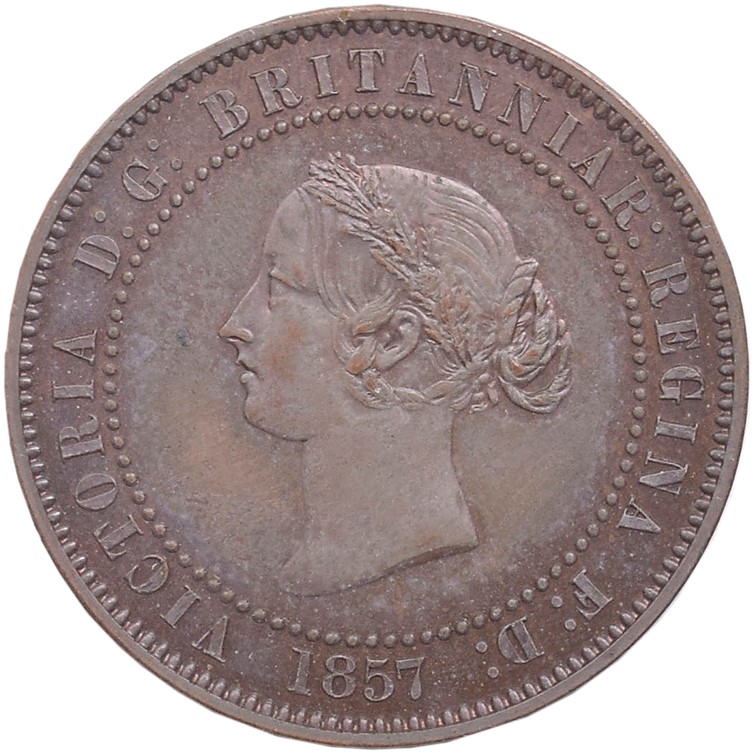
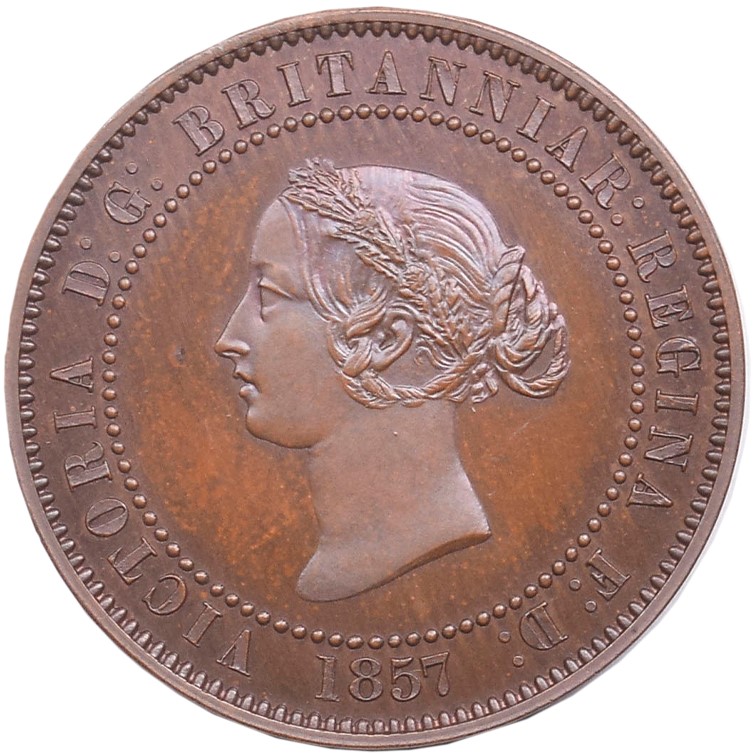
Developed over time in poor storage conditions, residues can be both monstrously unattractive and cause permanent damage. This Great Britain 1857 pattern Decimal Half Penny arrived at NGC Conservation to address a dull spotty residue that had formed over much of the surface. Many decades of improper storage most likely allowed the residue to develop, a problem that frequently plagues many classic Proof coins, patterns and regular issues alike. Careful conservation work was able to remove the thick layers of residue, leaving a coin with bright surfaces. Following professional conservation, this coin was able to grade numerically with NGC.
 |
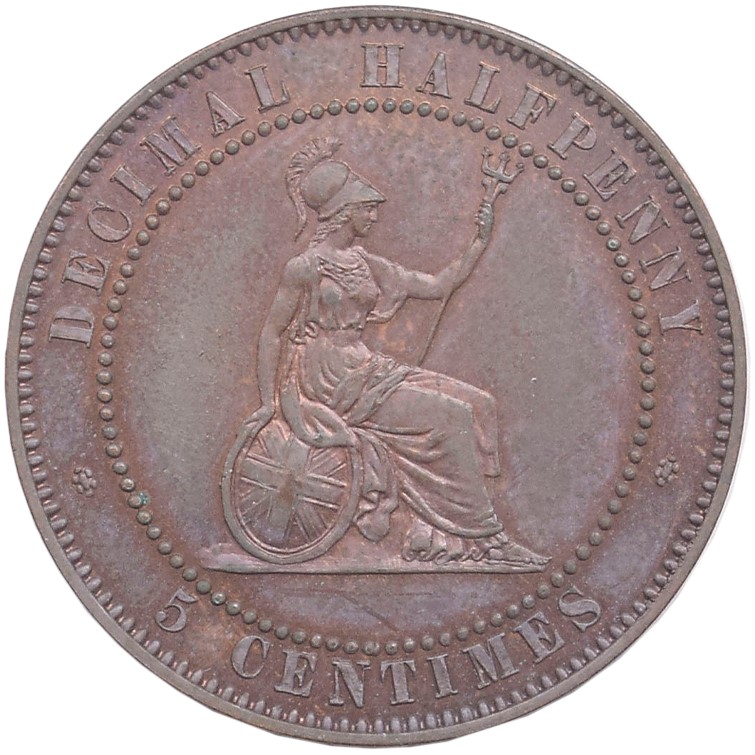 |
| Great Britain 1857 Bronze Pattern Half Penny Before conservation Click images to enlarge. |
|
 |
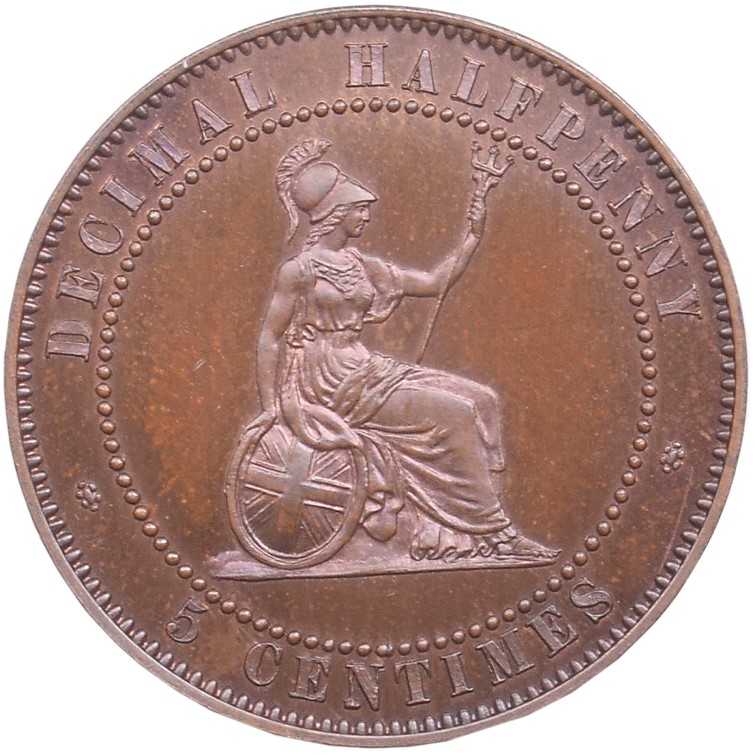 |
| Great Britain 1857 Bronze Pattern Half Penny After conservation Click images to enlarge. |
|
For more information about NGC Conservation, visit NGCcoin.com/ngc-conservation.
