IMPROPER CLEANING
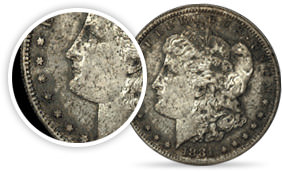
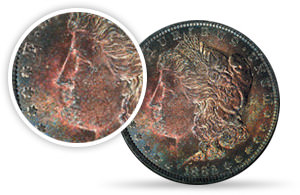
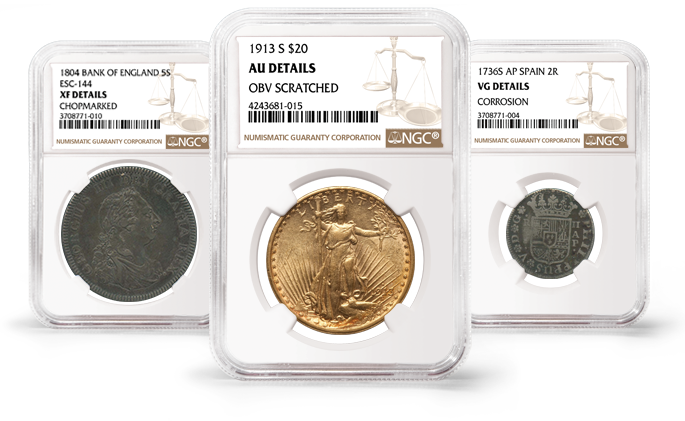
Among the most common reasons for a coin to receive Details Grading is unskilled and improper cleaning. The temptation to “improve” a coin’s appearance by chemically or mechanically cleaning it seems acceptable, until the possible detrimental effects are later explained to the collector. Light, non-destructive cleaning, particularly when found on older coins, may still permit numeric grading. Harsher cleaning that is destructive to a coin’s aesthetic appeal, however, will result in Details Grading only, and such cleaning is not correctable with conservation.
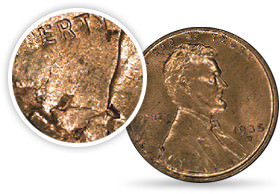
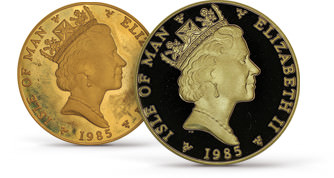
ARTIFICIAL COLOR refers to bronze, copper and copper-nickel coins that have been chemically dipped or cleaned. Under natural conditions, most copper coins will darken over time, but examples that retain their original “red” color are highly valued. That’s why “Red Brown” (RB) or “Brown” (BN) copper coins are sometimes treated to remove this toning. The resulting color usually has an unnatural and artificial look.
BRUSHED describes a coin that has been wiped with an abrasive brush. The affected areas may be narrowed down to OBV BRUSHED or REV BRUSHED.
BURNISHED is the term used when the cleaning is more aggressive and gives the coin a very brilliant but unnatural sheen. Sometimes this action is performed with some abrasive media such as ball bearings, or it may result from treatment within a rock tumbler.
IMPROPERLY CLEANED is a generic term to describe unskilled cleaning when the exact nature of the action is uncertain.
POLISHED is similar to BURNISHED, though it’s typically applied when the abrasive action is less severe.
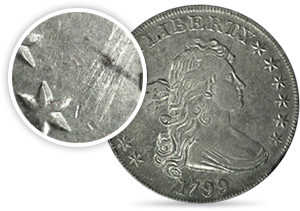
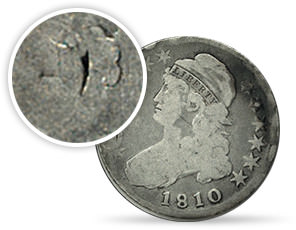
SPOT REMOVALS describes the unskilled, mechanical removal of “flyspecks,” small black spots of intense toning or corrosion. It also refers to similar removal of reddish “copper spots” often seen on gold coins.
SURFACE HAIRLINES are faint, abrasive lines that disturb a coin’s appearance, even though some original surface may remain underneath. They typically result from gentle rubbing with a cloth, and their severity may be described more fully through addition of the terms LIGHT, MODERATE or EXCESSIVE.
WHIZZED coins have been cleaned with a fast, rotary wire brush in order to simulate the effect of mint luster on a circulated coin. These are easily spotted by experts, as their lettering and other design details typically are distorted a bit by this action.
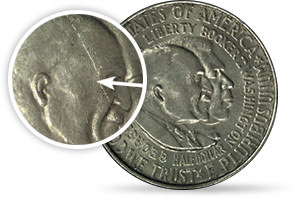
WIPED describes a coin that displays surface hairlines in one or more isolated areas. This is usually the result of accidental mishandling rather than intentional cleaning, but it still requires Details Grading. NGC’s graders may specify OBV WIPED or REV WIPED to more accurately describe the condition.
 |
Improper spot removal can result in damage to a coin, such as the scratch marks seen in the close-up, above, of this 1799 dollar. |